Search & learn guides · Chewing & enrichment
Yes—appropriate chewing can be part of mental and sensory enrichment for dogs. It gives them something to investigate and work on, but it is not a complete activity plan, an anxiety treatment, or a reason to offer an object that could damage teeth or be swallowed.
The useful question is not “What is the toughest thing my dog can chew?” It is “What can this dog enjoy comfortably, with the right materials and supervision?” Here is how to make that decision without turning chewing into an endurance event.
Why chewing belongs in an enrichment routine
The ASPCA includes chewing among the natural behaviors enrichment can support. Its guidance on destructive chewing also distinguishes ordinary exploration from chewing associated with problems such as distress or frustration. A dog using their mouth is not automatically misbehaving.
That does not make every chewing session beneficial. The object, your dog’s behavior, and the setting still matter. Chewing a suitable toy while comfortable is a different situation from frantically damaging an exit when left alone.
We use “mental stimulation” here in the everyday enrichment sense—not as a claim that a chew produces a measured increase in intelligence. Our mental stimulation guide explains how to combine different opportunities rather than expect one item to meet every need.
Choose for the individual dog, not the toughest label
The American Animal Hospital Association’s chew-safety guidance warns that very hard objects can damage teeth and that pieces broken from toys can be swallowed. Size, flexibility, and how easily a dog can tear an item apart all deserve attention. A label such as “natural” or “durable” does not answer those questions.
Ask your veterinarian for help choosing when your dog has dental problems, dietary restrictions, a history of swallowing objects, or unusually intense chewing. The AKC’s veterinary column on damaging chews similarly advises selecting with the dog’s age, size, and chewing behavior in mind and generally favoring some flexibility.
| Check | Look for | Reason to stop or reconsider |
|---|---|---|
| Size and shape | An item intended for your dog’s size and way of using it. | It can be swallowed whole or becomes small enough to swallow. |
| Hardness | Appropriate flexibility and manufacturer guidance. | An extremely hard object that risks a tooth injury. |
| Condition | An intact surface and no loose components. | Cracks, missing pieces, exposed filling, or unraveling material. |
| Food suitability | Ingredients and calories compatible with the dog’s feeding plan. | A dietary conflict or uncertainty about what the item contains. |
| Your dog’s response | Able to engage comfortably without trying to consume the toy. | Gulping pieces, discomfort, or guarding that makes approaching unsafe. |
This is an owner checklist, not a product certification. Passing one check does not guarantee safety. Avoid using hard bones, antlers, or household objects as a way to make the activity last longer; discuss suitable alternatives with your veterinarian.
A simple supervised chewing setup
Blue Cross recommends choosing appropriately sized chews, supervising their use, and guiding dogs toward suitable items. Here is a practical way to organize that advice at home.
- Meet immediate needs first. Do not use a chew to postpone a needed toilet trip, water, a meal, or rest.
- Choose a comfortable separate space. Keep children and other pets from approaching the dog while the item is in use. Food activities should not become a competition.
- Inspect the item before offering it. Follow its use and cleaning instructions. Start with a version your dog can use without excessive force.
- Stay available to observe. Watch how the item changes, not just whether the dog remains occupied. A video call is not automatically compatible with close supervision.
- Finish and check again. Put the item away when appropriate, clean it as directed, and note any damage before its next use.
Do not snatch an item from a dog who freezes, growls, or guards it. Create distance and seek qualified help rather than testing whether the dog will allow removal. Our behavior-problems guide helps organize what to report. Suspected swallowing, injury, or difficulty breathing calls for prompt veterinary attention, not another enrichment experiment.
Food-based and food-free options
A food-dispensing toy and an edible chew are not the same thing. With a reusable toy, the food is intended to be eaten and the toy is not. With an edible item, ingredients, portion size, and swallowing behavior still need consideration.
The ASPCA’s position on dog chews and treats emphasizes matching products to chewing behavior and keeping rewards nutritionally appropriate. Include any food used in the day’s feeding plan. A veterinary diet or calorie restriction is a reason to ask for tailored options, not to assume all treats are interchangeable.
Chewing does not have to mean adding food. A suitable non-edible toy can be an option for some dogs, provided it is used as intended and stays intact. Other dogs are better served by a different activity altogether. Our food-free enrichment guide includes choices beyond chewing.
When chewing household objects needs a closer look
First manage access: close the laundry hamper, put shoes away, and keep cables and other hazards out of reach. Blue Cross advises against punishing chewing and recommends calmly directing a dog toward an appropriate alternative. Setting up the room is often more useful than repeatedly rescuing the same shoe.
Next, record when the chewing happens. Does it occur during an ordinary play period, only around departures, or alongside another change? ASPCA guidance identifies several possible contributors; an object being damaged is not enough to diagnose boredom or separation anxiety.
If chewing is persistent, newly intense, involves swallowing non-food objects, or occurs with distress, discuss it with your veterinarian. Bring a description of the material, timing, and any pieces missing. Keep the original item or packaging available to describe, without making your dog demonstrate the behavior again.
Build variety without buying a harder chew
Our planning suggestion is to rotate types of opportunity, not increase difficulty every day. One available moment might suit a supervised toy; another might suit Find It, a short shared game, or quiet company.
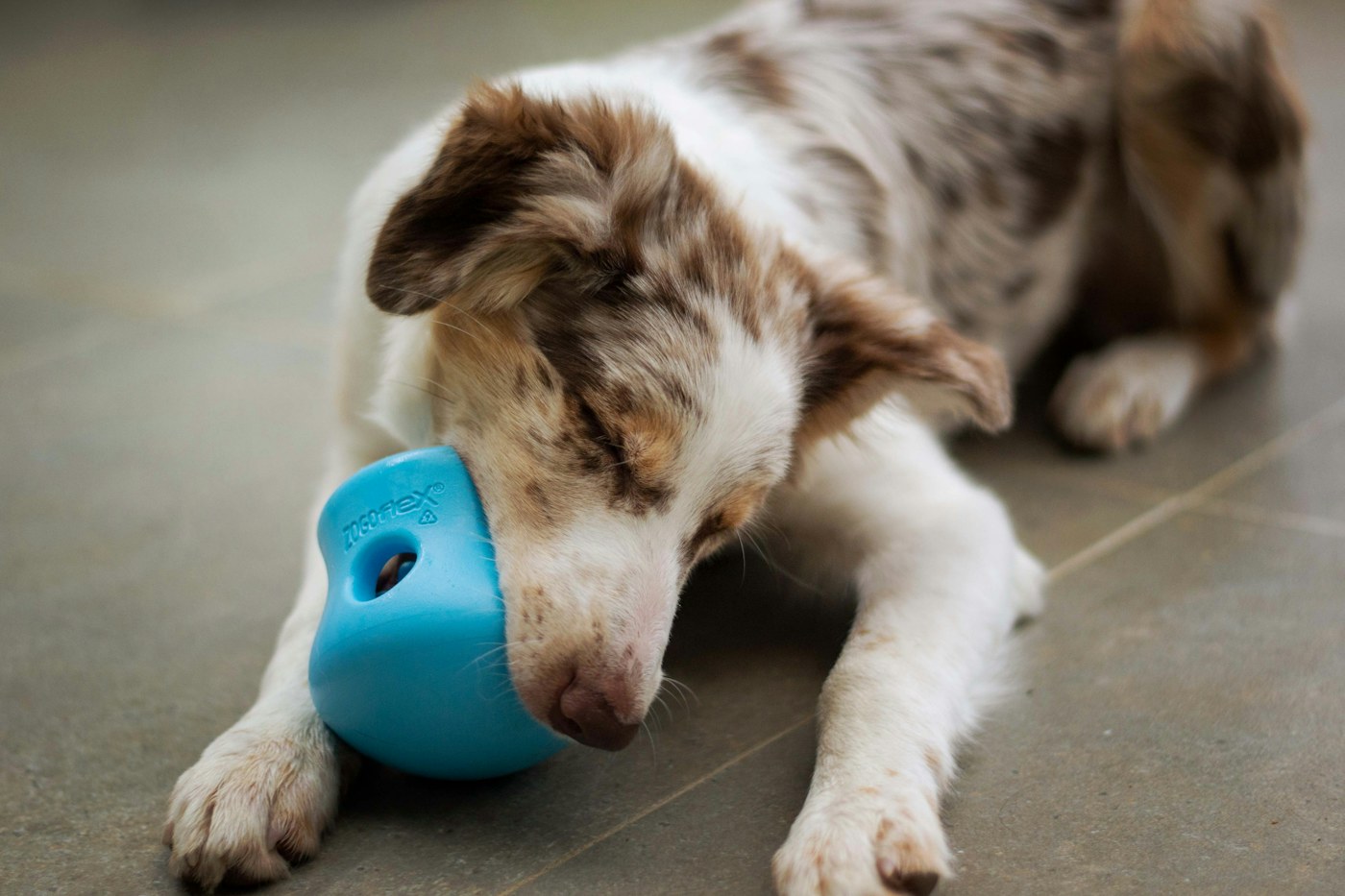
Use our toy-rotation guide to organize familiar options. In the weekly planner, a useful note could be: “Blue toy after the outing; inspect before use; separate room from the other dog.” That is an example reminder, not a required daily chewing dose.
Common questions
How many minutes should my dog chew?
There is no universal session length in this guide. Follow product instructions and individual veterinary advice, and watch comfort and wear. End sooner when needed rather than treating a duration as a goal.
Does chewing replace a walk?
No. A chew offers a different opportunity; it does not provide all the movement, toilet access, exploration, or companionship your dog may need. Plan those separately.
Does chewing clean my dog’s teeth?
Some products have a dental purpose, but chewing alone does not establish that teeth are healthy. Hard objects can cause damage. Ask your veterinarian about an appropriate dental-care routine and any product claims you are considering.
Can I leave a new chew with my dog while I go out?
Do not make an unattended period the first test of a new item. Observe use, follow its instructions, and discuss suitable unsupervised arrangements for your individual dog. No object is made safe solely by being sold as a dog toy.
Sources and editorial notes
The linked ASPCA, AAHA, Blue Cross, and AKC veterinary guidance supports the behavior, material-safety, and feeding considerations. The checklist, setup, and planning note are editorial tools, not hands-on product tests or a treatment plan. Read our editorial standards.