All enrichment guides · True to Dogs
Dog enrichment without treats starts with something else your dog enjoys: finding a toy, playing together, exploring familiar surroundings, or making a choice. Pick one invitation, make it easy to join, and allow your dog to decline. Food-free play does not need to be complicated.
Choose the reward before the activity
Think about what your dog already chooses when food is not involved. Do they bring you a toy, investigate a different part of the room, or settle near you? Use that information to choose today’s invitation. Praise and petting only help when your dog enjoys them in that moment.
Dogs Trust includes toy play, sniffing, and safe choices in its enrichment guidance. You can build a varied routine without adding food to every activity.
Four food-free ideas to try
1. Find a familiar toy
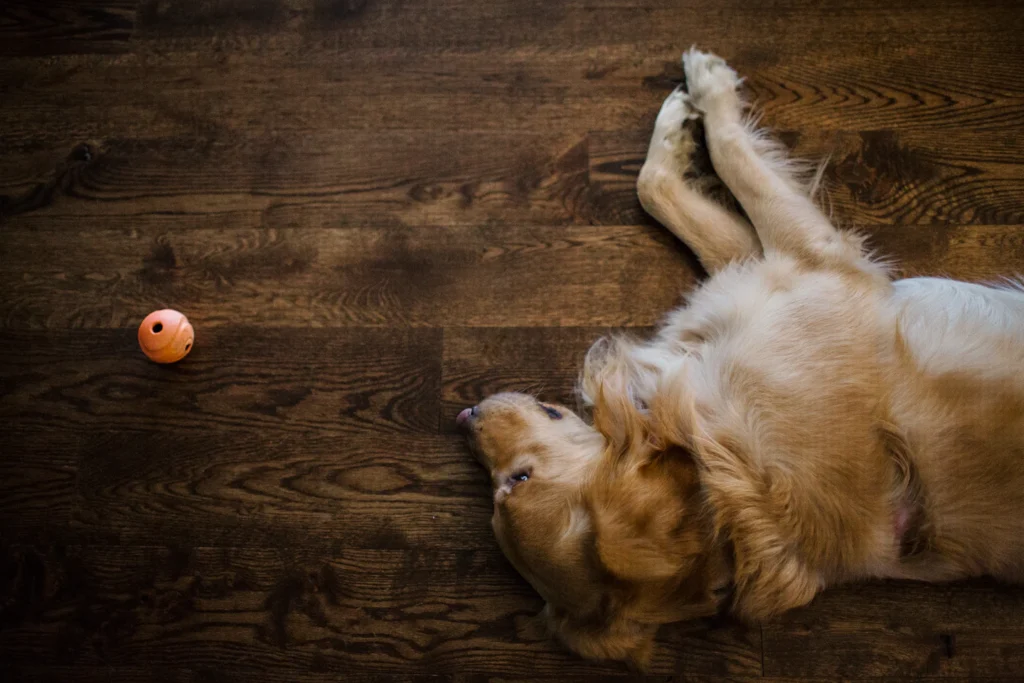
Let your dog watch you place a suitable favorite toy on a clear patch of floor. Invite them to investigate. If they approach it, offer the familiar play they enjoy. On the next turn, move it a short distance; keep it visible until the routine is clear. The toy itself does not have to dispense or smell like food.
2. Find you in plain sight
Stand a few steps away at an open doorway and invite your dog over. Make the reunion pleasant, using a greeting or shared game they like. Keep yourself visible for the first rounds. Our hide-and-seek guide explains how to progress without requiring a reliable stay.
3. Revisit an easy shared game
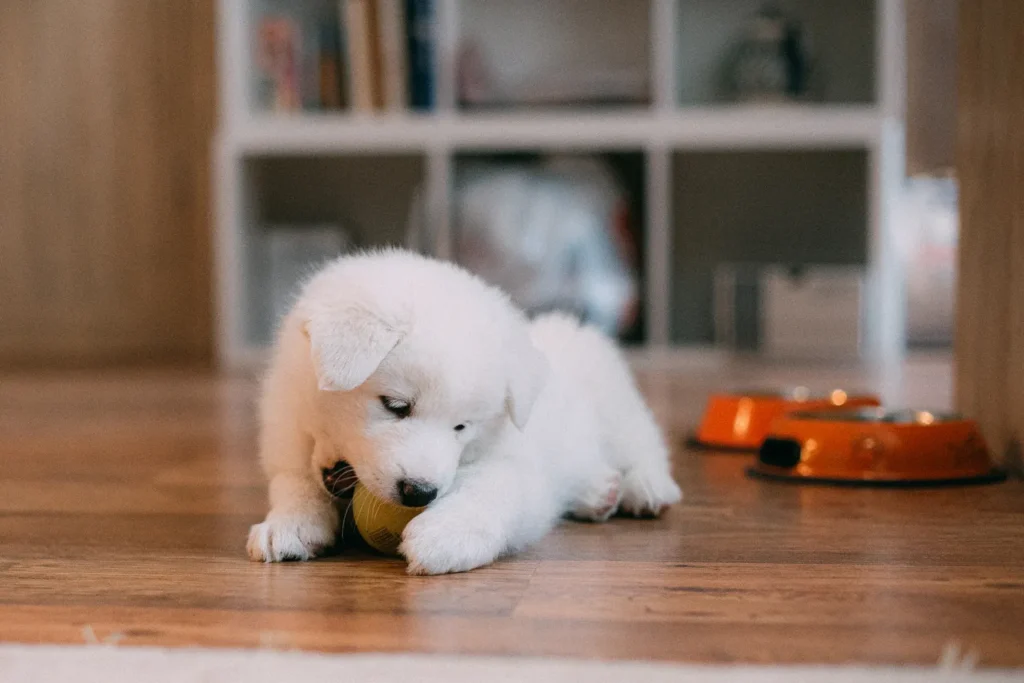
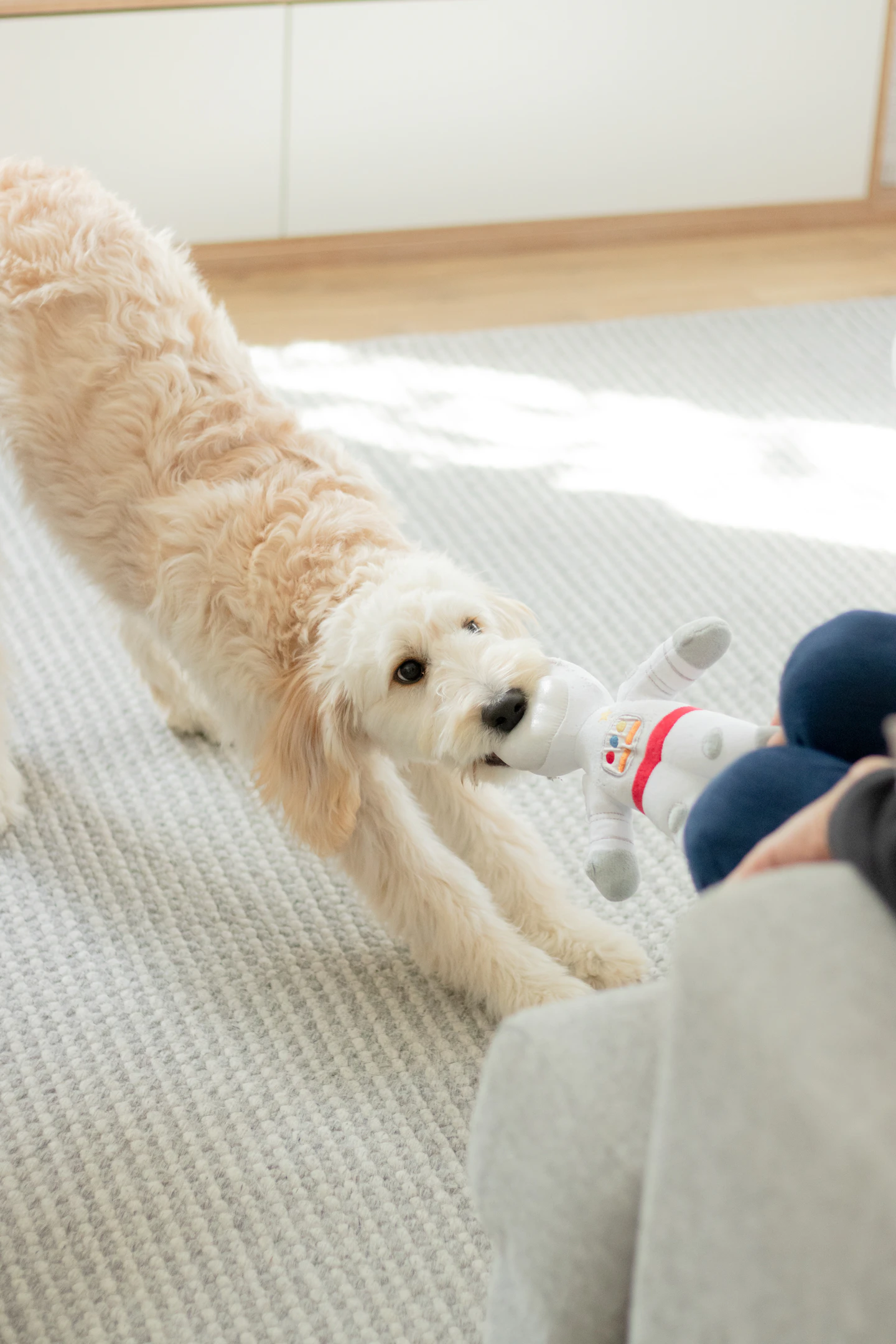
Choose a familiar game your dog already plays comfortably, such as bringing a toy over for a short interaction. Keep the space clear and the toy within easy reach. You do not need to introduce jumping, repeated throws, or a new training task to make the time together worthwhile.
4. Let your dog choose between two options
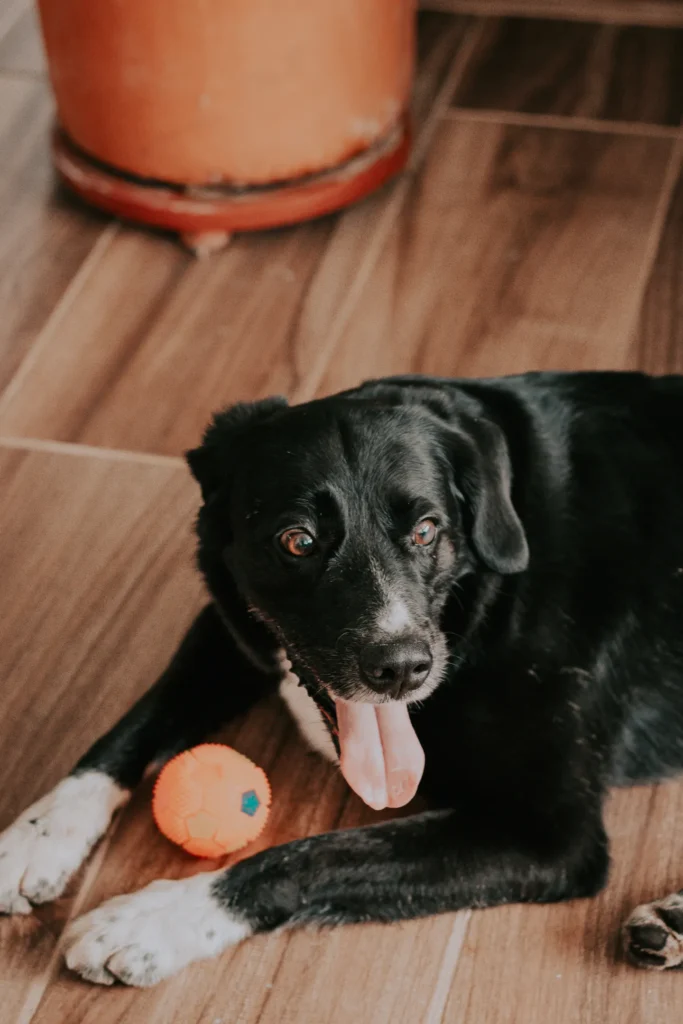
Offer two suitable toys with enough space between them to make the choice clear. Wait without waving one around to influence the answer. If your dog chooses neither, put the invitation aside. Use the choice to decide which toy to offer next time, rather than assuming that the most expensive or newest one should win.
Enrichment without food or toys
You can share a quiet moment and let your dog decide whether to sit near you, or offer the visible person-search above. Where it is safe and appropriate, let them take time to sniff on their usual outing. At home, give access to a familiar, dog-safe area to explore while you are present.
Leave scented oils, household fragrances, and unfamiliar plants out of the setup. An ordinary environment already has things to investigate. Rest is also a valid choice; you do not need to convert every quiet moment into a challenge.
Match the activity to your space
| Your space | A simple invitation | Keep it manageable |
|---|---|---|
| One clear floor spot | Choose between two familiar toys | Place both within comfortable reach. |
| A room and an open doorway | Find a visible person | Use a short, uncluttered route. |
| A quiet shared area | Offer company and a choice of resting spot | Let your dog approach or move away. |
For more indoor choices, use our small-space activities guide. If you want to make existing toys easier to organize, try a simple toy rotation rather than buying more equipment.
Common questions
Does using kibble count as enrichment without treats?
It avoids adding separate treats, but it is still food-based enrichment. If you want an activity with no food at all, choose a toy, person, or environmental option. Do not change a prescribed feeding plan to make a game work.
What if my dog wants food more than toys?
A dog does not have to enjoy every kind of enrichment. Start from an existing non-food interest and keep the invitation easy. There is no reason to withhold meals to make a toy more attractive.
Can I use these games while I am working?
The toy searches and person games need your participation. Pick a time when you can be present. A brief shared activity before a meeting is a different plan from expecting your dog to run the game alone.
Make one small plan
Choose one option for the next convenient moment and write the exact version in a daily note in the weekly planner: “visible doorway find, then favorite toy” is enough. Afterward, note whether your dog joined in. Use that observation to choose the next invitation, without needing a harder task.
Sources and editorial notes
Background: Dogs Trust: enrichment activities. The indoor arrangements and planning examples are editorial suggestions. The source organization has not reviewed or endorsed this guide.