All enrichment guides · True to Dogs
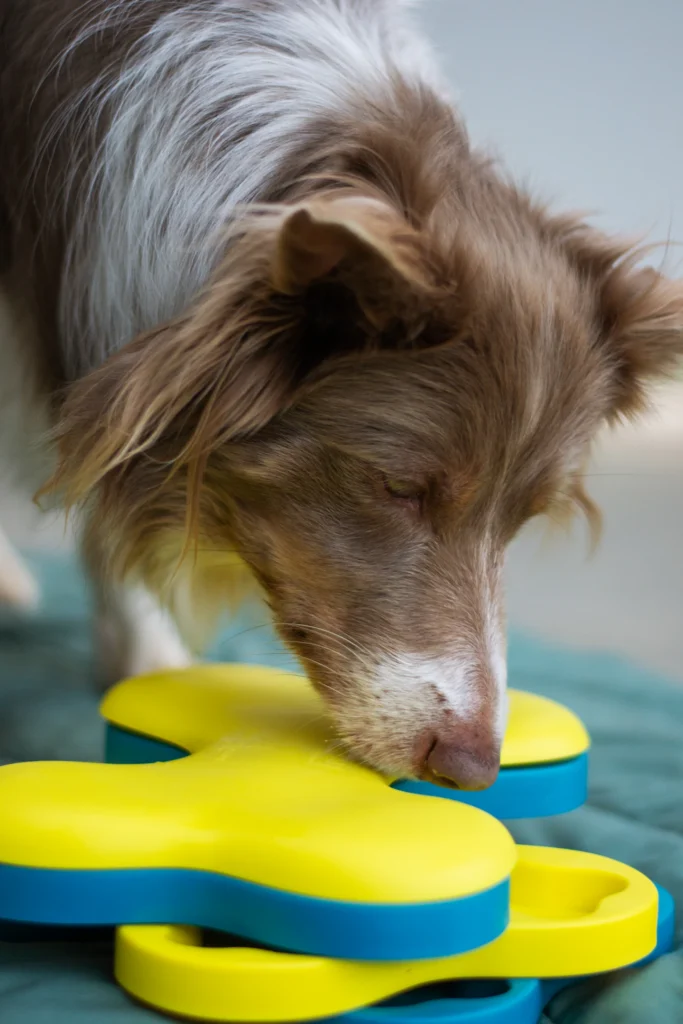
Mental stimulation gives your dog opportunities to investigate, learn and make choices. It can be a small part of an ordinary day: exploring an interesting smell, practicing a familiar cue or figuring out how to reach a little of their usual food. You do not need a cupboard full of puzzles to begin.
This guide helps you choose a starting point, adjust the challenge and notice what works. For step-by-step games, use our brain games guide or the activity finder.
What counts as mental stimulation?
Mental stimulation is one part of enrichment: giving a dog worthwhile opportunities to use their abilities and express natural behavior. The American Animal Hospital Association includes problem-solving, foraging, sensory exploration, movement and social interaction in its enrichment guidance. These categories can overlap. A gentle search with you, for example, can involve sniffing, thinking and shared time.
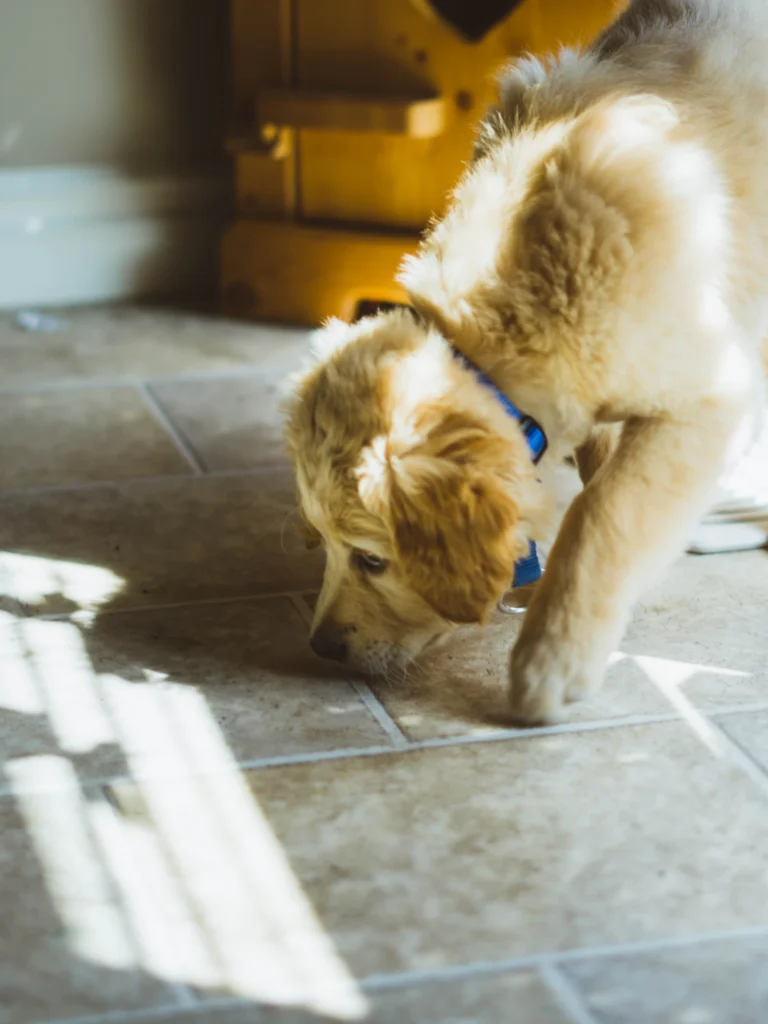
A useful question is, “What can my dog comfortably explore or figure out here?” The answer may be much simpler than an advanced puzzle.
Choose an invitation that fits today
Start with your available attention, the space you can use and something your dog already enjoys. The following choices are starting examples, not a daily checklist.
| Your situation | Starting invitation | Helpful guide |
|---|---|---|
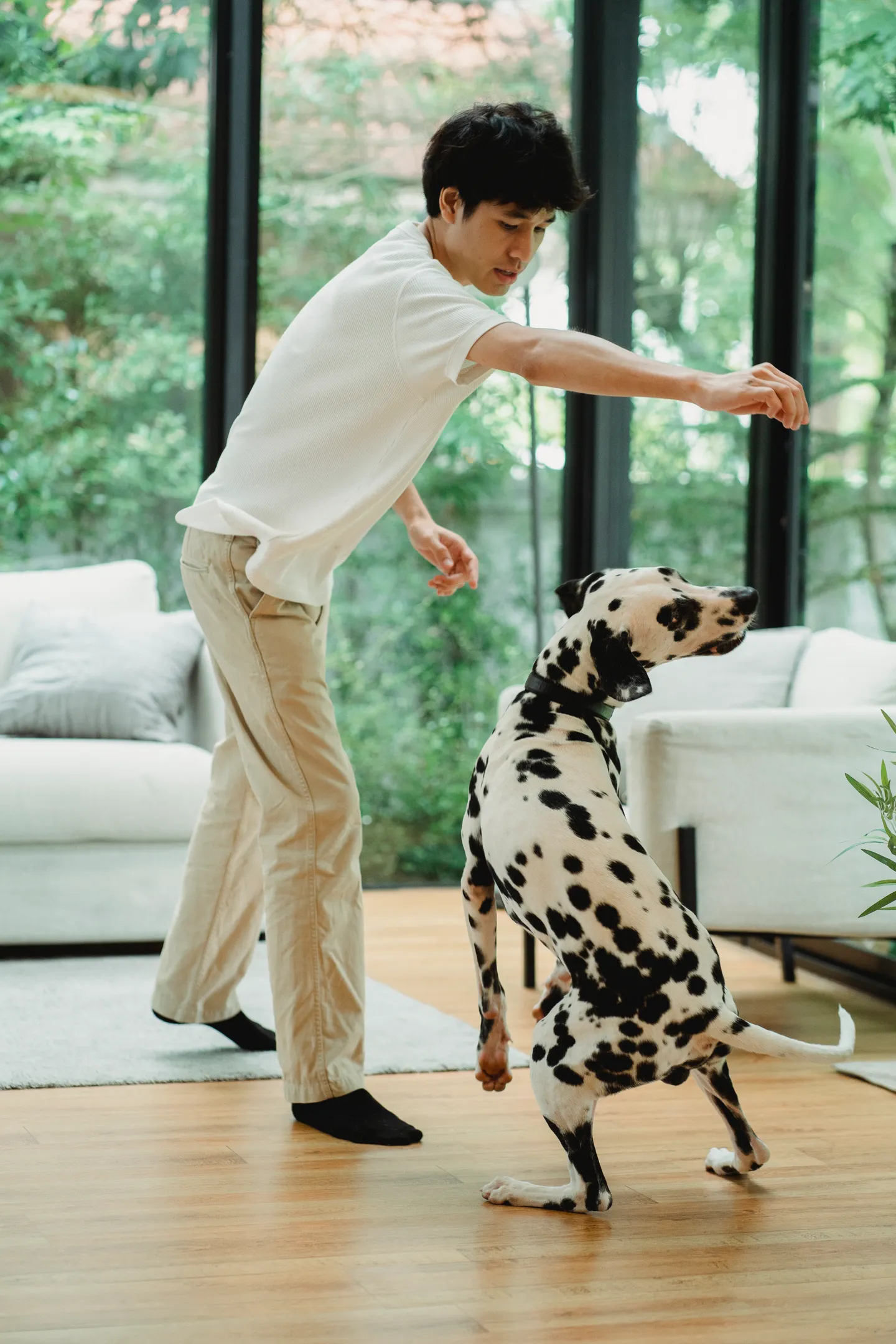
| You can join in for a few turns. | Offer a familiar, comfortable skill and reward their participation. | Short learning games |
| You have a clear patch of floor and can supervise. | Begin with one easy, visible find. | The find it game |
| Your dog enjoys searching. | Repeat a familiar search layout before changing it. | Scent games |
| You want to use what you already own. | Choose a setup whose materials suit your dog. | DIY enrichment |
If your dog chooses rest instead, leave room for that choice. An enrichment plan is an invitation, not another set of boxes your dog has to tick.
Make the task understandable before making it harder
Use a version your dog can approach successfully. With a search, that might mean letting them watch you place the item. In a learning game, it may mean using a cue they already understand. When you change the setup, change one thing at a time so you can tell what made a difference.
For example, repeat the same easy find on a clear mat. On another turn, move the find a small distance while keeping it visible. There is no need to add a container, a towel and a new room at the same time. The next step is optional; repeating a comfortable favorite is useful information too.
Stay nearby, help when needed and stop if the activity becomes frustrating or uncomfortable. Supervision matters especially with homemade setups. Choose objects that are suitable for your individual dog and remove damaged materials safely.
How much does your dog need?
There is no session length that this guide can prescribe for every dog. Age, health, interests, experience and the activity itself all affect what is appropriate. Start with a few easy turns and watch whether your dog chooses to continue. Leave time for rest and appropriate physical activity rather than treating a thinking game as a replacement for either.
Food used in games should fit your dog’s usual daily allowance and any dietary advice from their veterinarian. Access to normal meals should not depend on completing a difficult puzzle.
Keep a note that helps you choose next time
A simple observation is more useful than a score for how “smart” your dog was. Try this format in the weekly planner:
- Setup: What did you offer, and where?
- Response: Did your dog approach, repeat the activity, need help or leave?
- Next time: Repeat it, simplify one part or choose something else?
Example planner note: “Find it on the living-room mat. Watched the first placement, then looked for another. Repeat this layout next time.”
Build a routine you can actually repeat
Choose one familiar learning activity and one search or exploration activity. Place them on days when you can take part or supervise. Keep a backup choice that takes less setup. You can record an adaptation in the planner’s daily notes; the planner saves in the browser you are using.
If you mainly need activity instructions, continue to our enrichment activity guide. If your dog repeatedly seems distressed or their behavior changes suddenly, seek individual veterinary or qualified behavior advice instead of simply adding more challenging games.
Sources and editorial notes
These organizations provide background for this educational guide. They have not reviewed or endorsed this page. The examples and planning prompts are editorial suggestions, not measured results or medical advice.
- AAHA: enrichment and mental wellbeing — background on types of enrichment; the linked page includes sponsorship.
- Dogs Trust: enrichment activities — choosing activities, supervision, food allowance, choice and rest.