All enrichment guides · True to Dogs
Before buying another puzzle, check what you already have—and what your dog can use safely. DIY enrichment works best when the first version is simple enough to understand and quick enough for you to supervise from start to finish.
Start with the least equipment
A visible food search on a clean floor is a useful first option. Add a household object only when it improves the game for your dog. The recycling bin is an idea source, not a safety certification.
Choose your setup
Times below are flexible planning estimates for a short session, not tested averages, exercise prescriptions, or a promise of how long your dog will stay interested.
| You have | Try this | Planning and cleanup |
|---|---|---|
| Usual food and a clear floor | Visible find it | About 2–3 minutes together; check for missed food |
| An intact towel | One loose fold | About 3–5 minutes; shake out and wash as needed |
| A suitable muffin tin | Open-well search | About 3–5 minutes; wash and dry the tin |
| A familiar dog toy | A toy in plain sight | About 3–5 minutes; put the toy away if damaged |
| A clean, shallow box | An open-box food find | About 3–5 minutes; remove all packaging hazards first |
1. A food search without a container
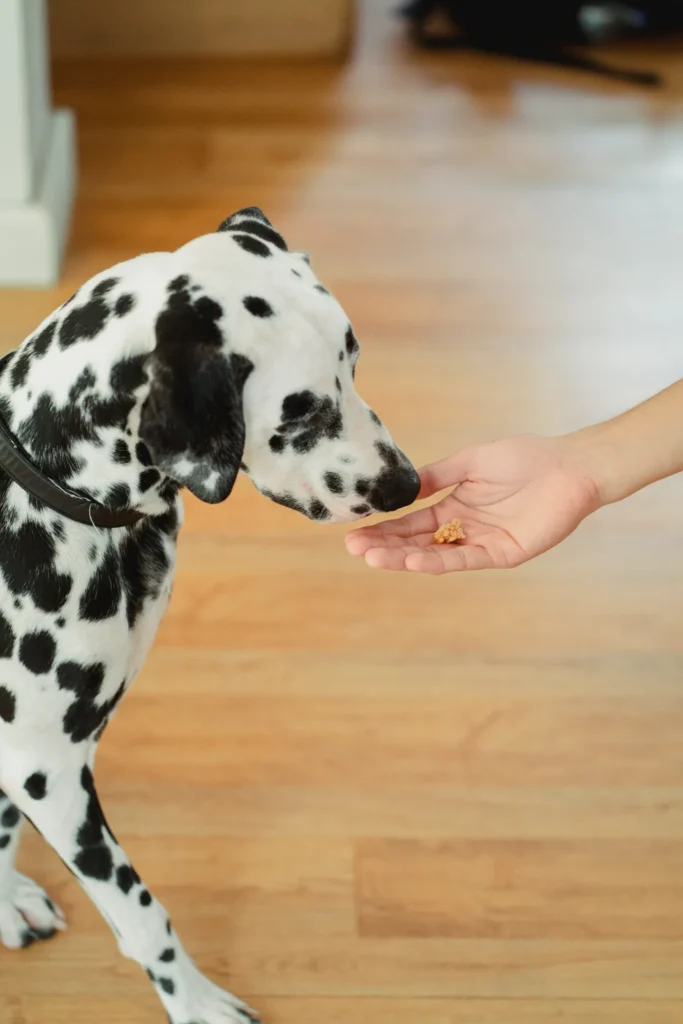
Choose a small, uncluttered area you can reach easily. Begin with a food piece your dog can see. After they find it, put another nearby. Keep the first round inside that small area instead of scattering food across the whole room. This makes it easier to tell when the game is finished and whether anything is left behind.
2. One towel fold
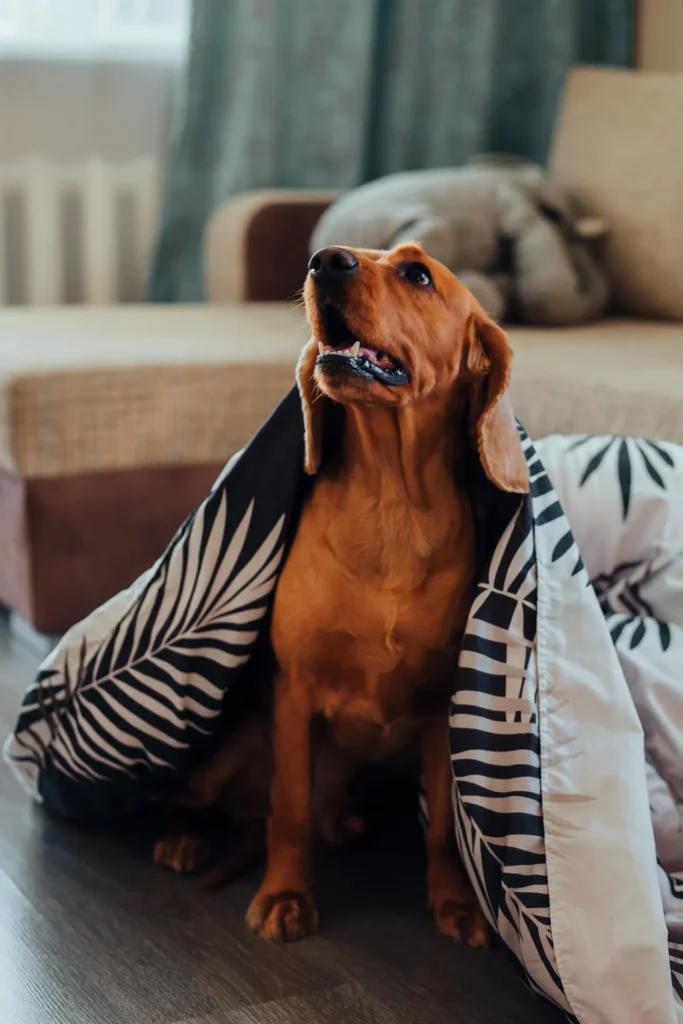
A towel adds a movable cover to the same basic search. Use the step-by-step towel guide and begin with the food partly visible. If your dog grabs or eats fabric, leave the towel out of the activity and use the clear-floor version instead. More knots are not the answer to a dog who is chewing the setup.
3. An open muffin tin
Begin with a clean, undamaged tin and accessible food in a few uncovered wells. Your dog does not need to remove a ball to have a worthwhile first turn. Our muffin tin guide covers the equipment checks and when to skip covers altogether.
4. A familiar-toy search
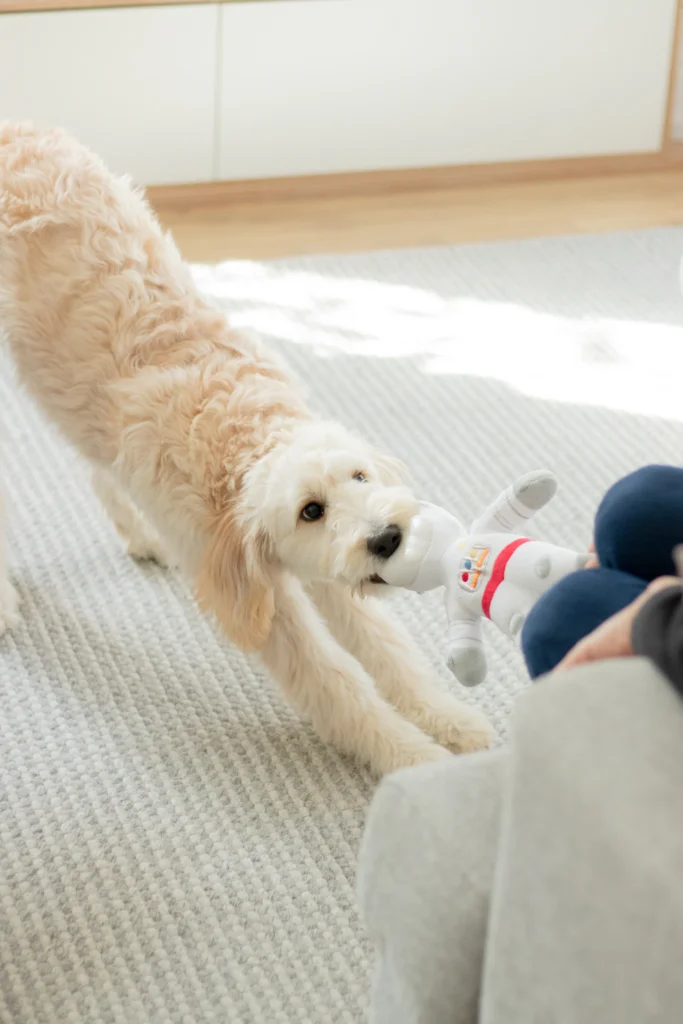
Place a favorite toy in an obvious floor-level spot while your dog watches. Invite them over and share the type of play they enjoy when they find it. For another round, move it to a nearby visible spot. Keep your hands out of a dog’s mouth and do not turn the game into a struggle over taking the toy away.
5. A shallow open box
For dogs who do not chew or swallow cardboard, an open shallow box can hold a few visible food pieces. Remove tape, staples, loose labels, and packing material first. Choose a box the dog can investigate without climbing in or putting their head through a hole. Keep the first version empty except for the food; paper filling is optional complexity, not a requirement.
The ASPCA includes cardboard-based activities among its DIY enrichment ideas. Here, the deliberately open setup keeps inspection and cleanup straightforward. If cardboard becomes the target of chewing, choose a game without it.
A useful household-material check
- Can my dog investigate without getting their head or mouth trapped?
- Is there anything sharp, loose, coated, or damaged?
- Would I be concerned if my dog tried to chew this material?
- Can I supervise closely for the whole game?
- Is there an easier option without this item?
A “no” to safe access or supervision means choose a different setup. If your dog guards objects or food, avoid taking an item by force; get individual help with that behavior rather than adding a puzzle challenge.
Make DIY easy to repeat
Store clean equipment together, separate from damaged items waiting to be discarded. In your weekly notes, record the exact easy version that worked: “two open wells” is clearer than “food puzzle.” Keep one no-equipment backup for days when setup or cleanup would stop you playing at all.
Follow your dog’s lead. Supervise these games, allow your dog to leave, and finish if they seem uncomfortable or frustrated. Food comes from their usual daily allowance. Choose materials for your individual dog; household objects are not chew toys.
Make it fit your day
Choose one activity that fits today, then give it a place in your week. Open the activity finder or open your weekly planner. The planner saves in this browser. Use its daily notes for variations or an activity that is not in the dropdown.
Keep exploring
- Choose from all enrichment activities
- The towel game, step by step
- Muffin tin setup and troubleshooting
Sources and editorial notes
This guide is an editorial starting point for everyday play. The organizations below provide background on enrichment or the activity discussed; they have not reviewed or endorsed this page. Adapt every game to your dog.
Published October 4, 2026. Written for busy owners and small homes.