A puppy training schedule by age is a guide to priorities, not a calendar of skills every puppy must master. Begin with useful, easy learning when your puppy comes home. Keep comfort, rest, toilet needs, and positive experiences ahead of completing a command list.
This page focuses on what to practice. For meals, potty trips, sleep, and the flow of the whole day, use the puppy daily schedule. Save individual learning goals in the free training planner.
Puppy training priorities at a glance
These age bands are our flexible planning examples. A puppy who joins your household later, is worried, or has different prior experience may need to start with the earliest foundations. Dogs Trust’s puppy guidance emphasizes individual needs and learning at the puppy’s pace.
| Stage | Useful focus | A small example |
|---|---|---|
| 8–10 weeks | Name response, toilet routine, safe rest, gentle first handling | Reward a voluntary glance toward you in a quiet room |
| 10–12 weeks | Repeat foundations; introduce simple cues and equipment comfortably | Take one or two relaxed steps beside you indoors |
| Around 3 months | Easy recall, exchange games, settling, positive experiences | Come a short distance in an enclosed familiar space |
| Around 4 months | Practice known skills in carefully chosen settings | Repeat an easy cue in a different quiet room |
| 5–6 months | Keep reward history strong; practice around manageable distractions | Check in with you well away from a mild distraction |
| Adolescence | Revisit easy versions; maintain boundaries and comfortable routines | Shorten the distance when a previously familiar cue is harder |
8–10 weeks: make learning feel safe and predictable
Start with tiny moments that fit between care and rest. Your puppy may look toward you, follow a step, or investigate a mat. Reward the moment you want without asking for a long sequence. Say the name in a friendly way and notice voluntary attention; avoid turning every interaction into a test.
House training begins with access, supervision, and timely reinforcement. Keep potty notes in the Puppy Potty & Routine Tracker, and use the potty schedule guide for transitions. Do not withhold water or assume an age-based holding-time formula can set the routine.
Introduce handling in small, comfortable steps with the puppy free to disengage. A crate or pen should be introduced as a comfortable place, not used to force independence through distress. For the daily care picture, see the 8-week routine, 9-week routine, and 10-week routine.
10–12 weeks: repeat before expanding
Choose a foundation from the everyday puppy cues. One comfortable sit, a short approach toward you, or a few relaxed steps indoors can be a whole practice opportunity. Keep the reward ready so your timing is clear.
Let the puppy become comfortable with a harness or lead gradually before expecting a walk. Follow our loose-leash guide for the learning process. Record the environment in the planner: a quiet hallway and a busy outdoor path are different tasks even if the cue has the same name.
A next-session note might read: “Repeat two steps in the hallway; no added distance yet.” That gives everyone in the household the same easy starting point.
Around 3 months: connect useful skills with everyday moments
Keep recall practice in secure, easy places. Introduce exchanges with safe, low-value toys rather than taking treasured objects by force. Build a mat routine around voluntary interest, then short comfortable pauses. Reward choices you want to see again.
Read the 12-week / 3-month daily routine for balancing these moments with care. If the puppy has an unusually busy day, reduce the practice demand. You do not need a new skill every day to make a training plan useful.
Around 4 months: make changes small
When a familiar skill is comfortable, try one modest change. Move to another quiet room, change your own position, or add a small amount of duration. Avoid increasing place, distance, duration, and distractions together.
Keep attention on comfort during handling and mouth-related practice. If a puppy avoids contact or seems sore, stop and ask the veterinarian when appropriate. Use the 4-month routine to keep care predictable while activities change.
5–6 months: keep foundations useful as interests change
Continue rewarding easy check-ins, loose-leash moments, calm greetings, and coming toward you. If the puppy is more interested in the surroundings, choose a quieter setup. The next training step may be easier than last week’s; your notes help you see why.
Manage access to roads, open doors, wildlife, and other dogs regardless of how well a cue works indoors. A checklist stage is not a safety guarantee. Keep your 5-month routine or 6-month routine flexible around the individual dog.
Adolescence: revisit the easy version
Adolescence does not begin or end on the same birthday for every dog. Avoid labeling a harder day as defiance. Ask what changed in the setting, reward, health, or task. Reduce difficulty and rebuild a clear sequence.
Continue familiar practice and protect rest. If a behavior changes suddenly or the dog appears uncomfortable, seek veterinary advice. If you need help with persistent fear, aggression, or distress, choose an appropriately qualified professional using reward-based methods.
Socialization is not a list of forced greetings
The AVSAB socialization statement supports early, appropriate experiences while considering health and welfare. Ask your veterinarian which places, classes, and contacts fit your puppy’s vaccination status and local disease risk. Do not use this age chart as permission for public-ground exposure.
Choose manageable experiences and give the puppy space to observe and retreat. A calm look at something new can be enough; greeting every person or dog is not required. Read our puppy socialization guide and positive puppy training guide.
Record one small goal instead of an age deadline
In the training planner, write the skill, setting, reward, what worked, and what needs to be easier. Use the skill checklist to choose priorities and the training plan template to organize them. The practice schedule helps you place short opportunities around rest.
What if my puppy is behind this chart?
The chart is not a test. Start from what your puppy can comfortably do now. Ask for help when comfort or safety is the issue rather than trying to catch up with a timetable.
What if I work away from home?
Training does not replace care coverage. Start with the puppy workday schedule and complete puppy care guide, then fit manageable practice around the care you have arranged.
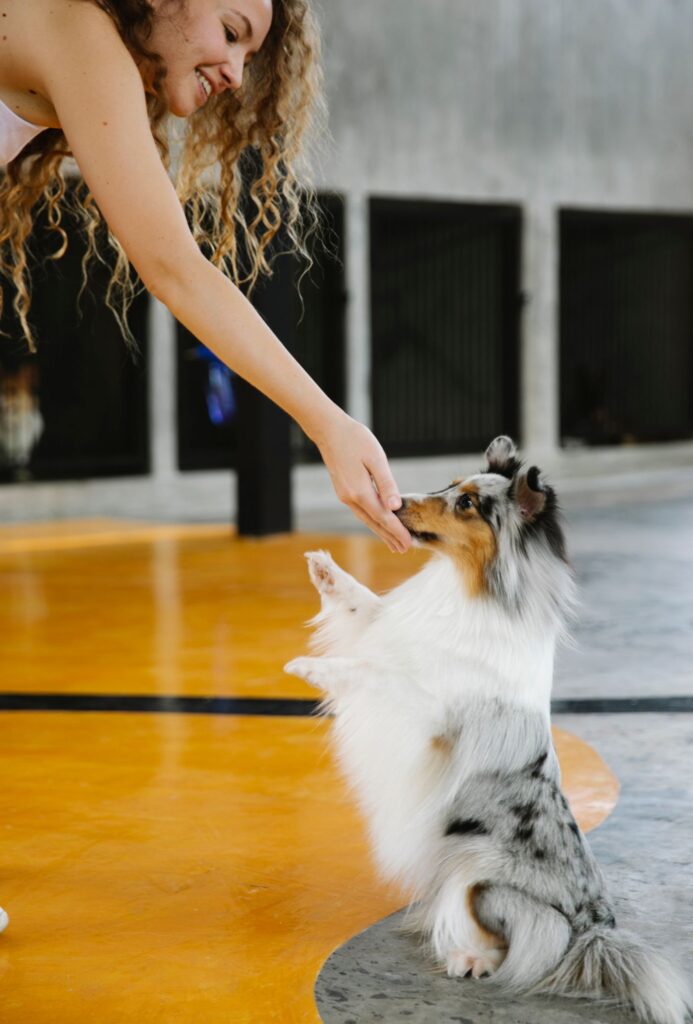
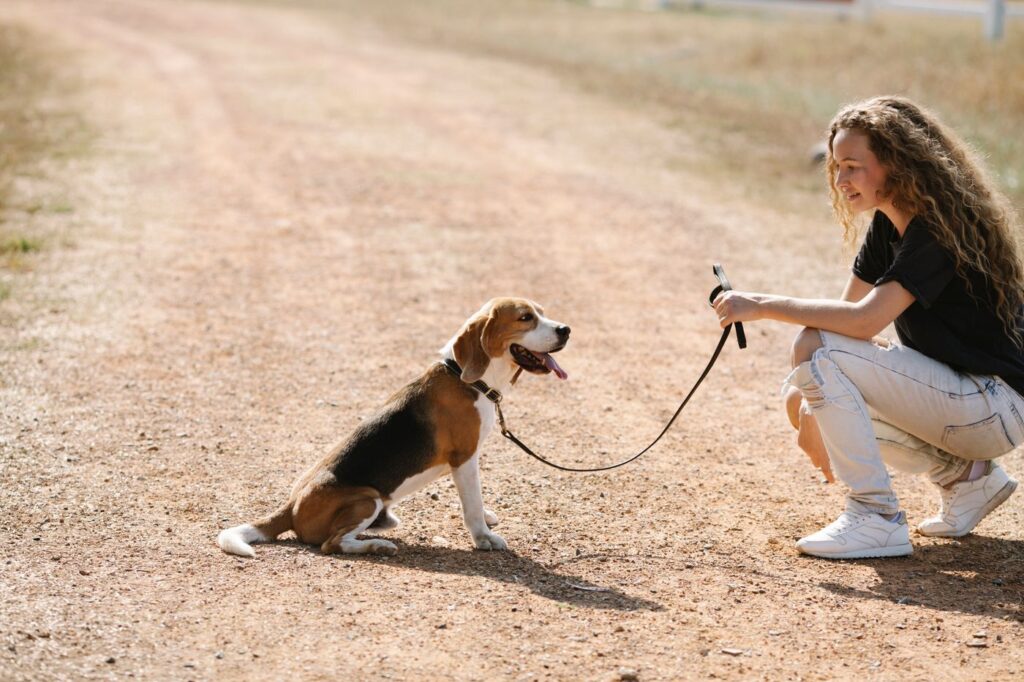
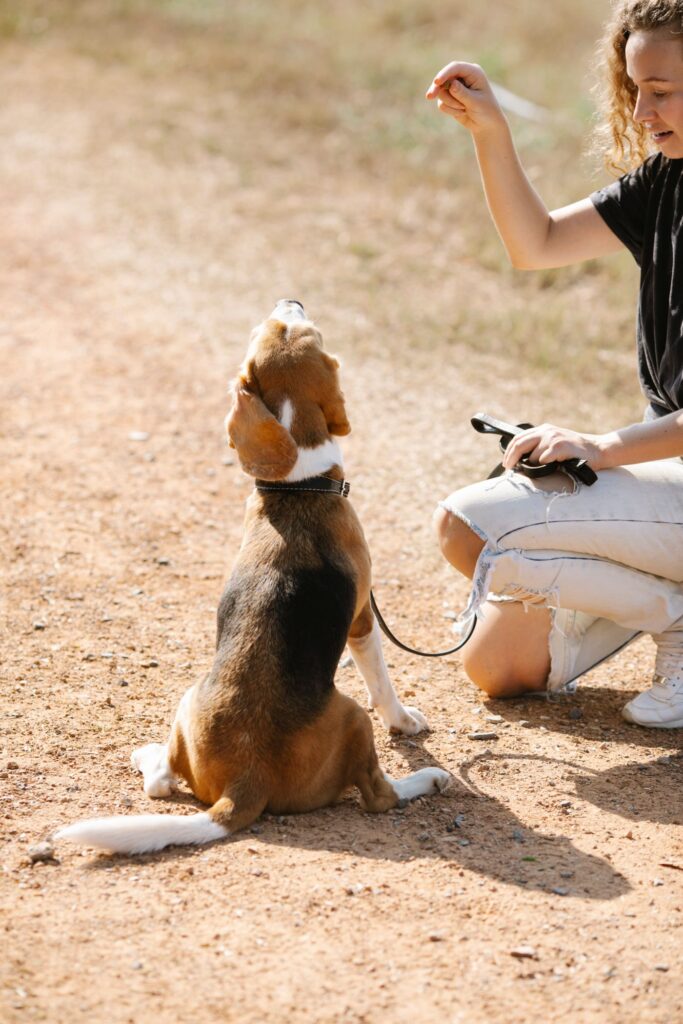
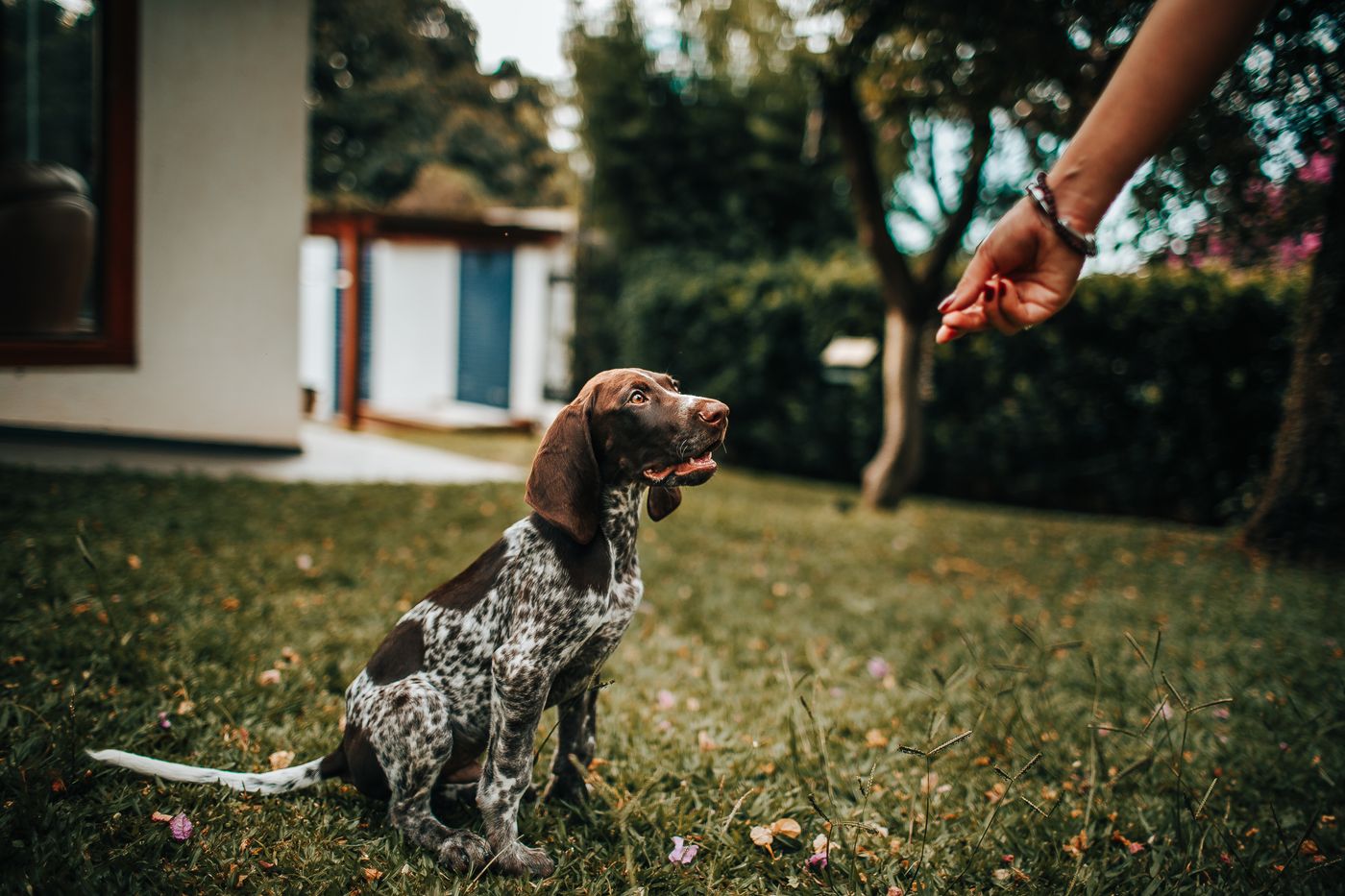
Illustrative stock photograph: Helena Lopes / Pexels, used under the Pexels License. No endorsement implied.