Training & behavior guides · Learning about the world
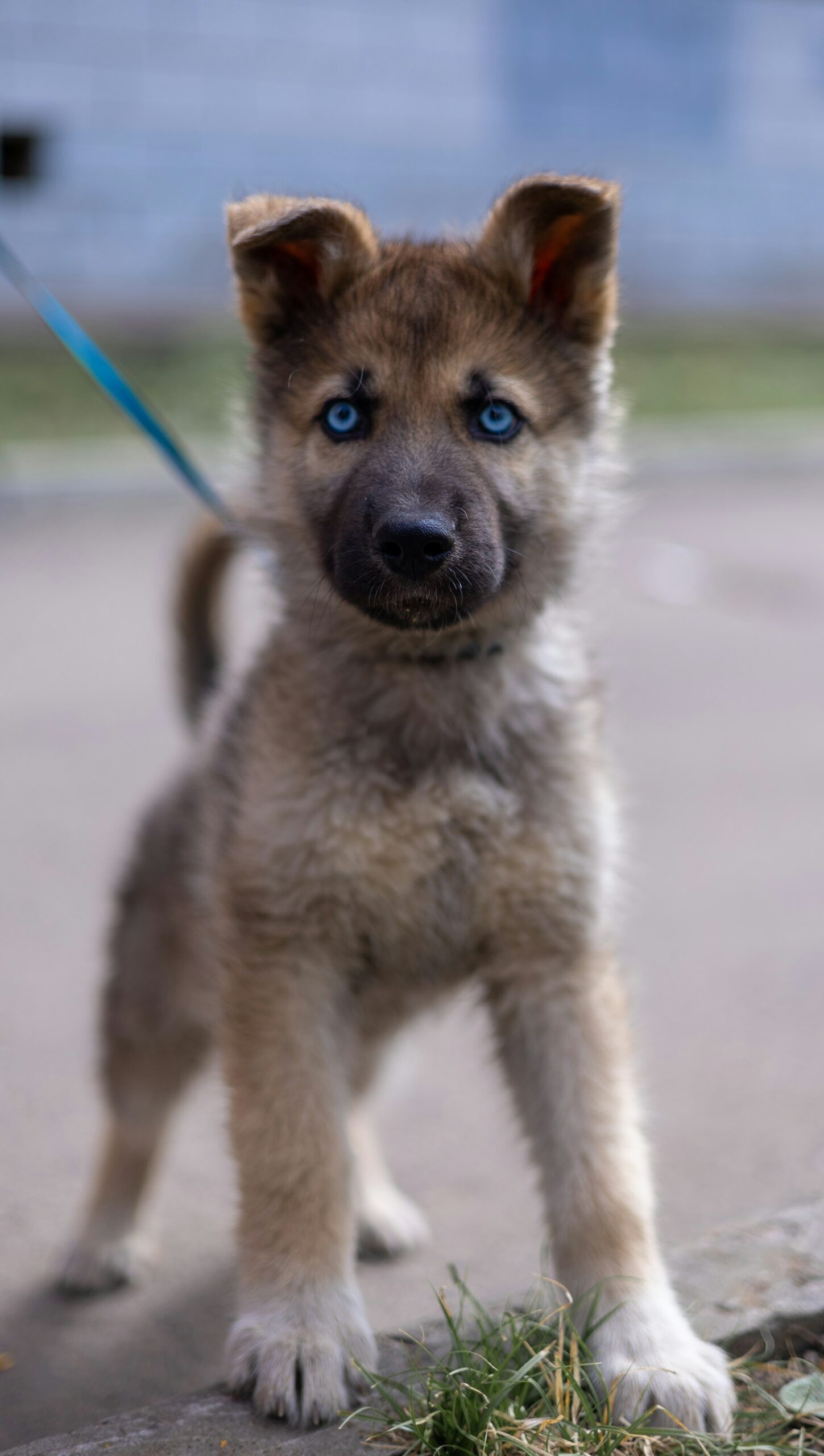
Puppy socialization is about comfortable experience with everyday life—not meeting as many people and dogs as possible. Begin with manageable sights, sounds, places, and interactions. Let the puppy observe and move away, and adjust the experience before it becomes overwhelming.
A puppy quietly watching a bicycle from a suitable distance may have a more useful learning opportunity than one carried into the middle of a noisy crowd. Quality matters more than collecting a row of checkmarks.
What socialization includes
The Royal Kennel Club describes socialization as learning about social interactions and everyday surroundings, including people, other animals, travel, and household sounds. It is broader than puppy play.
Choose experiences that fit the life your puppy is likely to lead. In a small home, a delivery sound, a visitor entering, a vacuum stored in the hallway, and moving between rooms may be more relevant first steps than an ambitious outing.
Make space for normal care and rest between experiences. The aim is not to fill every waking minute with something new.
Begin early, with a veterinary plan for risk
The American Veterinary Society of Animal Behavior identifies the first three months as an especially important socialization period. It supports suitable early socialization before puppies are fully vaccinated, rather than delaying every new experience until later.
That is not permission for unrestricted contact with unfamiliar dogs or public ground. Ask your veterinarian which locations, contacts, and classes are appropriate for your puppy’s vaccination status and local disease risks. Early learning and infection prevention need to be planned together.
Blue Cross describes carried outings and controlled contact with known vaccinated dogs as possible early options, while avoiding contaminated areas and dogs of unknown vaccination status. Secure carrying arrangements still need to suit the puppy and handler. Public walking, a home visit, and a carefully managed puppy class are not the same exposure.
For travel familiarization, see our car-outings guide. A car trip should be comfortable; transport is not automatically a positive experience.
A practical approach to one new experience
Dogs Trust recommends gradual, controlled introductions while the puppy is relaxed, and stopping when worry or excessive excitement develops. Apply that principle with a simple plan:
- Choose one thing. Start with a quiet visitor, a stationary object, or a distant sound—not several new challenges together.
- Make the starting point easy. Use more distance, less movement, or a quieter version.
- Allow observation. Do not pull, carry, or lure the puppy closer simply to complete the encounter.
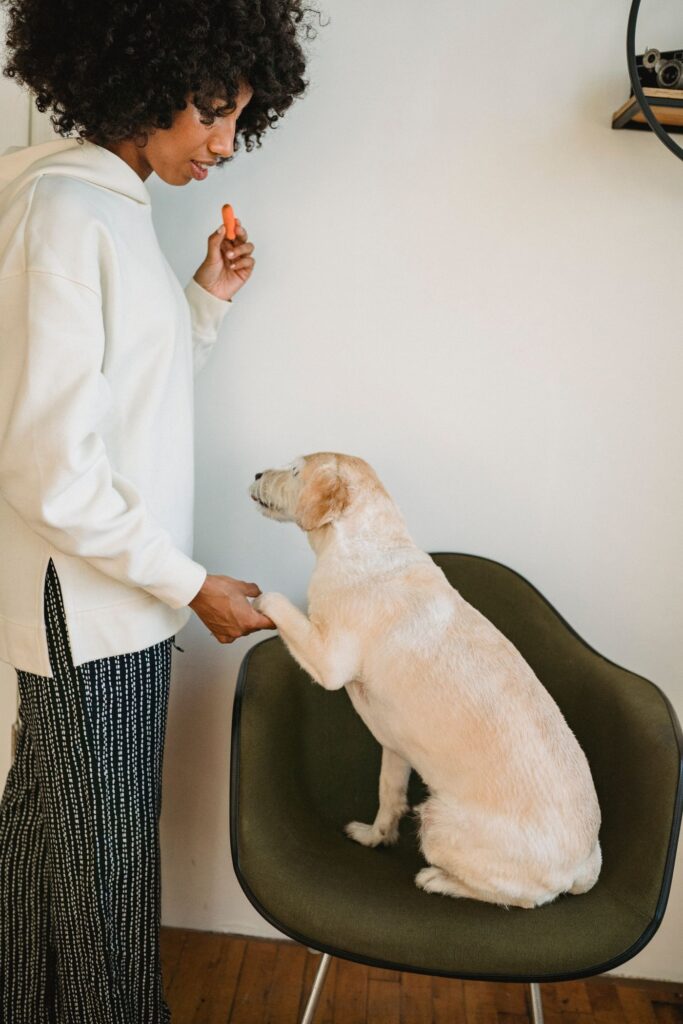
- Offer a pleasant association. Use suitable food, a familiar game, or wanted attention without making it conditional on approaching.
- Finish and review. Leave while the experience remains manageable and note what would make the next attempt easier.
This is an organizational framework, not a behavior-treatment protocol. A puppy who repeatedly freezes, hides, tries to escape, or cannot recover after an experience needs individual support.
An everyday socialization menu
Choose from this editorial menu according to veterinary advice and your puppy’s response. It is not a requirement to complete every row, and these examples are not individually tested exercises.
| Experience | A smaller starting version | When to simplify |
|---|---|---|
| A visitor | One calm adult seated at a distance, with no reaching. | The puppy retreats or cannot choose whether to approach. |
| A household object | A folded umbrella or switched-off vacuum in a roomy area. | The puppy avoids the whole area or becomes fixated. |
| A sound | A quiet version with room to move away. | Startling, hiding, or repeated worry appears. |
| A surface | A stable, nonslip section in a familiar safe place. | The puppy hesitates or appears uncomfortable moving. |
| A known suitable dog | A brief, supervised encounter arranged with health and behavior suitability in mind. | One dog persistently follows or the other cannot disengage. |
| Gentle handling | A brief touch the puppy is comfortable with, followed by a pause. | The puppy turns away, struggles, or tries to leave. |
For direct introductions to another household dog, use the more specific new-dog introduction guide. Socialization does not require your puppy to play with every dog they see.
Watch the puppy, not just the checklist
Animal Trust’s veterinary guidance highlights freezing, retreating, trembling, and hiding as reasons to stop pushing an encounter. Read the whole situation rather than diagnosing an emotion from one isolated movement.
A quiet puppy is not necessarily comfortable. Notice whether they can explore, disengage, and recover, as well as whether they bark. If an experience is too much, increase distance or leave. Do not hold the puppy in place until they stop objecting.
Food is not a way to pull a worried puppy into contact. Offer support without making the scary thing unavoidable. Persistent or pronounced fear deserves a conversation with your veterinarian and a qualified reward-based behavior professional.
Choose a class for how it is run
AVSAB describes puppy classes as one possible organized setting, with attention to health requirements, cleanable premises, and positive teaching. Ask the instructor and your veterinarian about entry requirements rather than assuming an advertised age makes a class suitable.
Useful questions include: How are puppies separated when one needs space? What happens when a puppy is worried? Is play supervised and optional? How are illness, vaccination records, and cleaning handled? Can you observe the teaching approach before joining?
A room full of puppies is not automatically good socialization. Look for manageable group arrangements, clear instruction, and permission to pause. Avoid classes that rely on force or make frightened puppies endure unrestricted play.
Record the next step, not the number of meetings
Our suggested note format is experience; starting distance or intensity; what the puppy did; next adjustment. For example: “Friend seated across the room. Puppy looked, then returned to a familiar toy. Next time: repeat the same quiet setup, still without reaching.”
Use a short reminder in the weekly planner, and keep space for familiar puppy activities and rest. Repeating a comfortable experience can be more useful than seeking novelty for its own sake.
Common questions
Should my puppy meet every person or dog?
No. Watching calmly and continuing without greeting are useful everyday outcomes. Give your puppy choice and avoid contact that neither dog nor person is comfortable with.
Can socialization begin before all vaccinations are complete?
Yes, in appropriate lower-risk arrangements agreed with your veterinarian. Do not confuse this with permission for dog parks, unfamiliar dogs, or unrestricted public-ground exposure.
Is it too late after the early puppy period?
No. AVSAB encourages continued suitable experiences beyond the early period. Go gradually and get veterinary guidance for fear rather than rushing to make up a supposed quota.
What if an outing goes badly?
End the difficult situation safely, allow recovery, and write down what happened. Plan a smaller version only when appropriate; repeated or severe fear is a reason to seek help before another attempt.
Sources and editorial notes
AVSAB, Dogs Trust, Blue Cross, Animal Trust, and the Royal Kennel Club provide the linked background. The menu and notes are planning examples, not an assessment of an individual puppy or a guarantee of adult temperament. See our editorial standards.
Keep track of the next training step
Choose suitable priorities with the puppy training schedule by age, then pick a small foundation from the training checklist. Record the skill, setting, reward, what worked, and what to make easier in the free Dog Training Planner & Progress Tracker. It saves locally in your browser and includes printable logs and backups.