Training & behavior guides · Reward-based foundations
Positive puppy training means teaching a useful behavior, rewarding it clearly, and arranging everyday life so your puppy can succeed without fear or force. It does not mean allowing everything. A closed cupboard, a manageable greeting, and an achievable lesson are boundaries too.
This guide explains how to organize the training, rather than repeating a list of commands. For the actual steps for sit, down, come, stay, leave it, and drop, open our six everyday cues guide.
What reward-based training means
Dogs Trust describes positive reinforcement as giving the dog something they value after a behavior you want, making that behavior more likely in the future. Food, play, and wanted attention can be rewards; the puppy’s response matters more than what the owner assumes should be motivating.
The American Veterinary Society of Animal Behavior recommends reward-based methods for dog training. Its humane-training statement also makes clear that structure and boundaries can be taught without fear, intimidation, or pain. This is a teaching approach, not a promise that every concern disappears without professional help.
Turn a complaint into a teachable goal
“Be less annoying” does not tell you what to notice or reward. Describe a small action you can see instead. The following are planning examples, not explanations for every dog’s behavior:
| Household concern | Prevent the immediate problem | A possible teaching goal |
|---|---|---|
| Picking up shoes | Store shoes out of reach. | Choose an appropriate available toy. |
| Jumping during a friendly hello | Keep the arrival quiet and optional. | Keep four paws on the floor for a brief approach. |
| Pulling toward a familiar smell | Choose a manageable route and secure equipment. | Take a few steps with a loose leash. |
| Not responding in a busy room | Move the lesson somewhere quieter. | Respond once to a familiar cue without added distractions. |
Do not use this table to relabel fear, pain, or aggression as ordinary manners. First establish that the activity is comfortable and safe. Our behavior guide explains when an assessment is the better next step.
Choose rewards your puppy can use
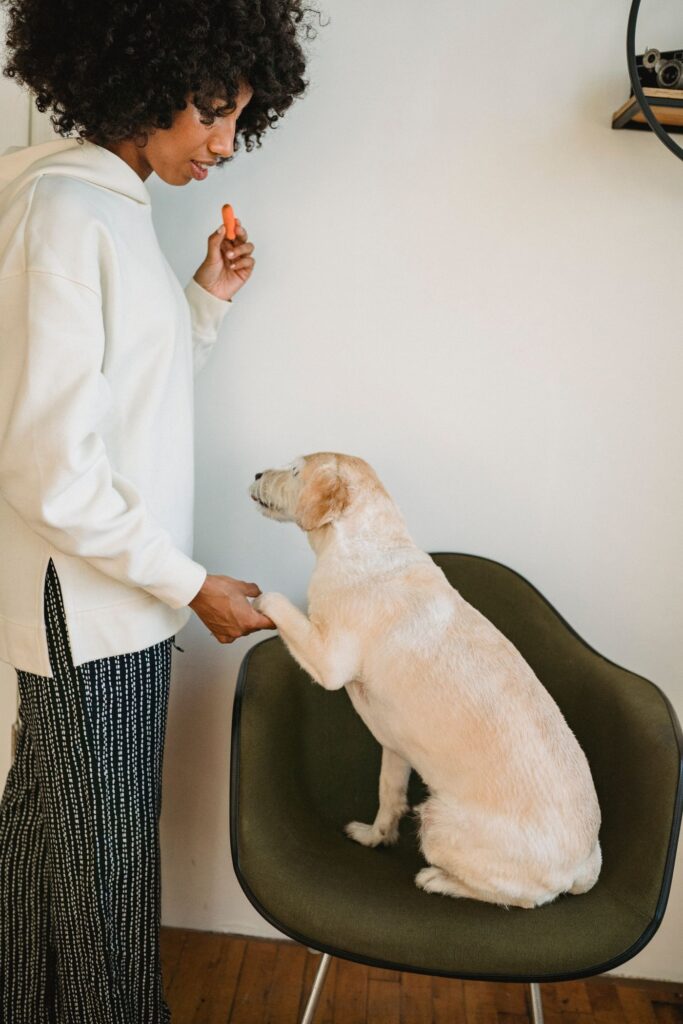
PDSA recommends finding out what your dog enjoys, keeping sessions short, and using clear, consistent cues. Have the reward ready before the successful moment arrives. A good response followed by a search through three kitchen drawers is difficult to connect.
Food rewards should be appropriate for your puppy and included in their feeding plan. Follow veterinary dietary instructions. Small pieces allow several easy repetitions without turning a lesson into a second meal. Some puppies enjoy a short toy game; others would rather have food or quiet attention.
Check that the proposed reward is genuinely wanted. A puppy turning away from petting should not receive more touching as their prize. Keep ordinary food, water, rest, and toilet access available; meeting basic needs is not a payment to withhold until a task is completed.
Use a simple practice loop
Battersea’s training guidance emphasizes prompt feedback and building behaviors in stages. Here is our way to organize a short lesson:
- Prepare: choose a quiet location, one goal, and a suitable reward.
- Offer the easiest opportunity: use a familiar cue or an achievable first step, not a whole chain of new requests.
- Notice success: identify the exact movement you wanted.
- Reward promptly: use food, play, or another suitable reward without adding an extra demand first.
- Pause and review: repeat only while it remains useful; otherwise make the task easier or finish.
A marker word or click can help identify the moment, but only after you have introduced its meaning. Our clicker guide separates the cue, marker, and reward so they do not become one confusing noise.
For a brand-new behavior, teach the action rather than simply repeating an unfamiliar word. Once the action becomes predictable, add a consistent cue. Do not push the puppy into a body position to create a repetition.
A lure and a reward have different jobs
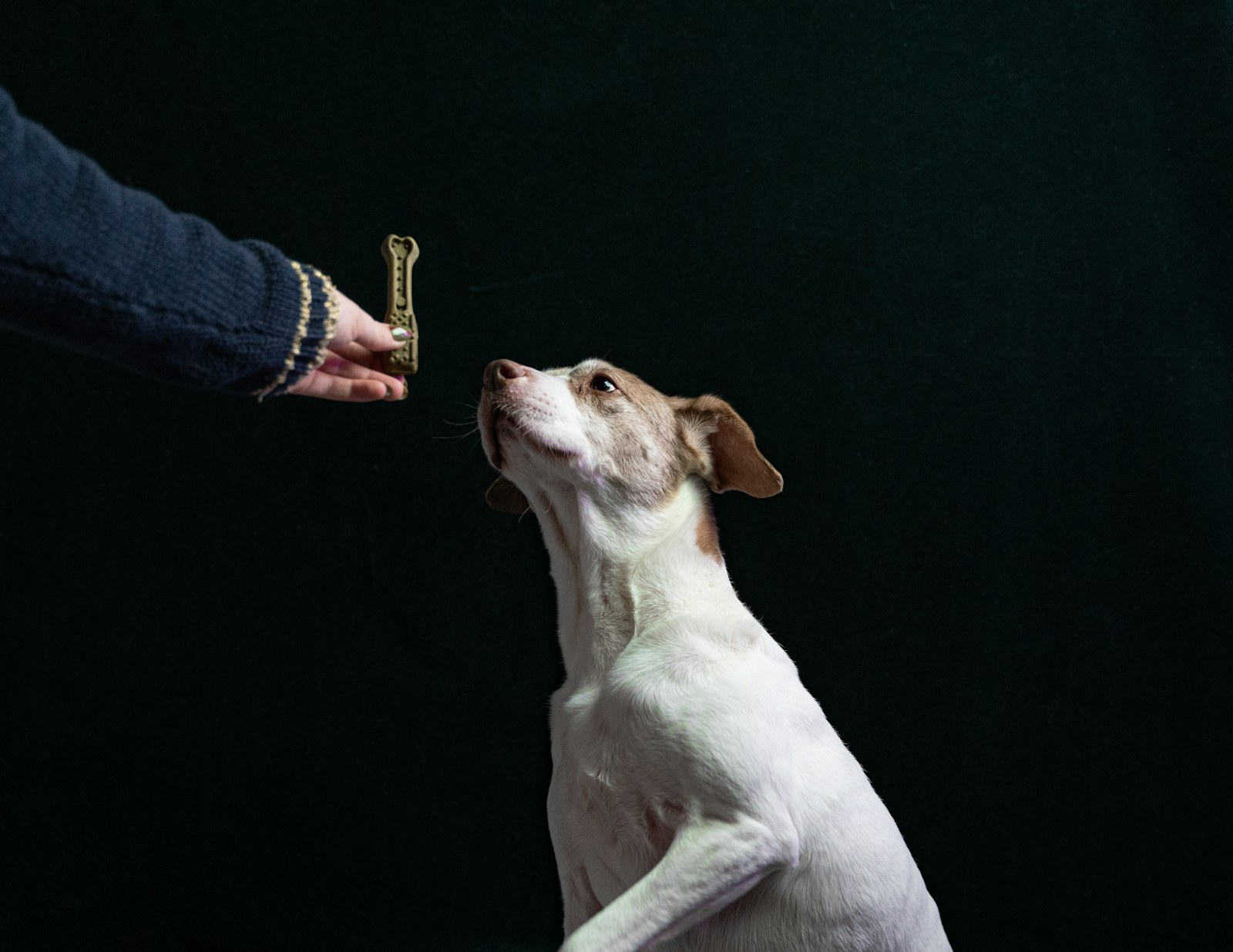
A lure helps guide a movement while the puppy is learning it. A reward follows the behavior. They may both involve food, but they are not interchangeable steps.
For example, the treat near the nose while teaching sit is a lure. Once the puppy understands the movement, the same hand gesture can become smaller and food can come from the other hand afterward. That progression is covered in the basic-cues guide. It avoids relying indefinitely on visible food before every familiar request.
Do not remove rewards abruptly just because the puppy succeeded twice. Dogs Trust recommends rewarding new skills consistently, then varying rewards when the behavior is reliable in different settings. A busy location can make a familiar exercise difficult again.
Set boundaries without making training frightening
The AVSAB humane-training statement recommends environmental management alongside teaching appropriate alternatives. Put hazards away, arrange supervision, and keep difficult situations below the level where the puppy is overwhelmed.
“Ignore mistakes” should never become “ignore a safety problem.” Move hazards out of reach, prevent unwanted access, and seek help for distress. Do not wait while a puppy chews an electrical cable or remains frightened simply to avoid interrupting a lesson.
For accidents, use our potty-training reset. For friendly but overexcited arrivals, use the calmer-greetings guide. Each situation needs a practical arrangement, not a universal “no.”
Make the plan consistent across the household
Write one short note that another adult could follow. For example: “Kitchen, before visitors arrive. Reward a familiar sit with a small approved treat. Finish if the puppy needs a break. Do not use ‘down’ to mean both lying down and getting off a person.”
Keep that note with the weekly plan, and record what actually happened. The planner stores reminders; it does not track every person who has trained or fed the puppy. Agree on responsibility rather than assuming someone else completed the task.
Our busy-owner training guide offers practical moments for short practice. Leave plenty of the day for normal care, suitable play, and undisturbed sleep.
When progress stalls, change the lesson
Review three things: clarity, difficulty, and comfort. Does the puppy know the cue? Did the situation become busier? Are they ready to engage? Change one variable before expecting a different result.
A puppy who works in the living room but struggles beside a busy doorway has not necessarily become stubborn. Return to the easier version and build gradually. If difficulties persist, or you notice pain, fear, guarding, or aggression, involve your veterinarian and a qualified reward-based professional.
Common questions
Does positive training mean no rules?
No. It means arranging and teaching the rules without fear or force. Preventing access to laundry and teaching a suitable alternative are compatible with reward-based training.
Will my puppy only listen when I have food?
Distinguish showing a lure from delivering a reward afterward. Fade unnecessary prompts as the skill becomes established, while continuing to make useful behavior worthwhile.
What should I do after a mistake?
Make the situation safe, reset calmly, and simplify the next attempt. A mistake is information about the setup; it is not a reason to shout or add a painful correction.
Can an adult dog use the same approach?
Yes. Reward-based teaching is not limited to puppies. Adjust movement, environment, and rewards for the individual dog’s health and experience.
Sources and editorial notes
Dogs Trust, PDSA, Battersea, and AVSAB provide the linked training framework. Household examples and the practice loop are editorial ways to organize it, not a tested course or individualized treatment plan. See our editorial standards.
Keep track of the next training step
Choose suitable priorities with the puppy training schedule by age, then pick a small foundation from the training checklist. Record the skill, setting, reward, what worked, and what to make easier in the free Dog Training Planner & Progress Tracker. It saves locally in your browser and includes printable logs and backups.