All enrichment guides · True to Dogs
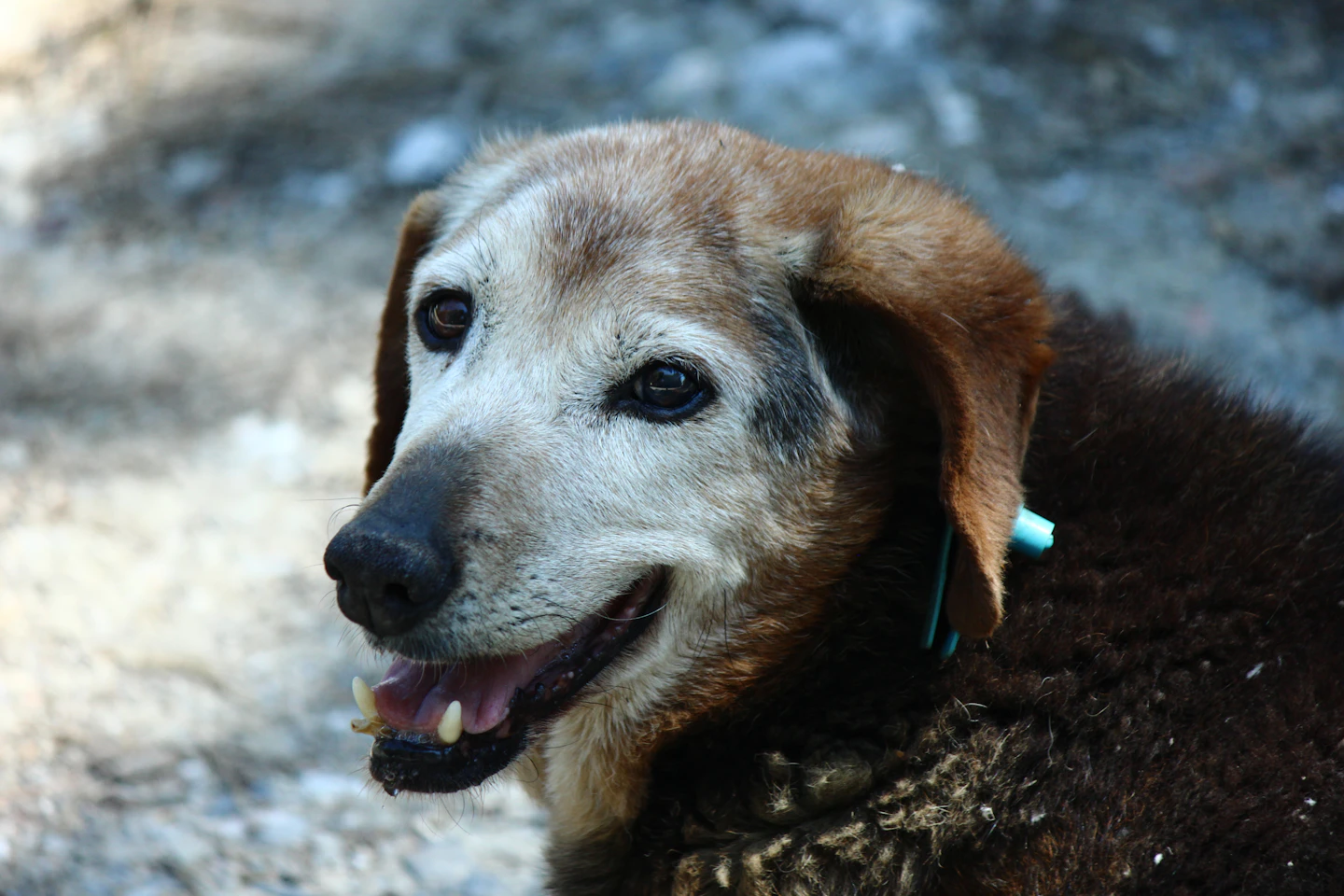
An older dog can still enjoy investigating a familiar toy, sharing a short learning game or finding something interesting nearby. The useful starting point is what feels comfortable and inviting for your dog today.
This guide focuses on adapting the setup and recording preferences. It does not prescribe exercise or treat age-related conditions. If your dog has mobility, dental, hearing, vision or other health concerns, ask their veterinarian which activities and positions are suitable before trying a new setup.
Start with access and comfort
Dogs Trust recommends keeping older dogs mentally active while adapting to changes in their abilities. AAHA’s senior-care guidance also includes enrichment and changes to the home environment as parts of individual care. For an activity at home, first think about how your dog will reach it and take part.
- Use a familiar area with a clear route and secure footing.
- Keep the activity within comfortable reach; avoid building a game around jumping or repeated position changes.
- Choose intact materials your dog can use safely. A household object is not automatically a suitable toy.
- Keep food choices consistent with their normal allowance and any prescribed diet.
- Let your dog leave and rest without having to finish.
If you are unsure what movement is comfortable, get individual advice rather than using a game to test the limit.
Adapt a familiar activity before adding a new one
The examples below show ways to think about a setup. They are options to discuss or adapt for your own dog, not instructions that every older dog should perform.
| Familiar interest | A simpler starting setup | What to observe |
|---|---|---|
| Searching | Place one visible piece of their usual food within easy, comfortable reach. | Can they locate and reach it without struggling? |
| Playing with a favorite toy | Offer the familiar toy where they can investigate it, without requiring a chase. | Do they choose to engage, or prefer to leave it? |
| Responding to a familiar cue | Use an already comfortable skill for a few turns, with a familiar reward. | Is the cue understandable and the movement easy? |
| Choosing between objects | Offer two suitable familiar toys close enough to inspect easily. | Which, if either, do they approach? |
For the basic search sequence, see our find it guide. Keep the easiest version when it suits your dog; progressing to hidden rewards is optional.
Make the game easier to understand
Changes in sight or hearing can affect familiar routines. Dogs Trust advises owners to avoid creating obstacles for a dog with declining vision and to adapt communication when hearing changes. Keep an activity area predictable, and use cues your dog already understands. Do not assume that a missed cue means stubbornness.
If a once-familiar game now seems confusing, pause. New confusion or behavior changes belong in a conversation with your veterinarian. This guide cannot determine their cause.
Repeat what your dog enjoys
A favorite does not need to become more complicated to earn a place in the week. Offer the familiar version, watch the response and decide whether to repeat it another day. Novelty can be modest: a different suitable toy, for example, rather than a completely rearranged room.
Shared time may be the part your dog likes most. Notice whether they approach you, the object or the search area. An empty box in the planner is fine when rest is the better choice.
Record observations without guessing a diagnosis
Use the weekly planner’s daily notes to record the setup and your dog’s response. “Reached the visible find easily; chose two turns” is more useful than “needs harder puzzles.” If participation changes, note what changed and bring relevant observations to the veterinary team.
A sample weekly plan could contain one familiar search, a separate toy-choice invitation and a repeat of whichever was comfortable. That is an organizational example, not a recommended dose of activity. Adjust or skip any part based on your dog’s needs.
Using the activity finder for an older dog
The activity finder filters by time, space, noise and equipment. It does not assess health or confirm that an activity is appropriate for an individual senior dog. Read the setup, choose a comfortable version and use the daily notes for adaptations that are not listed in the planner.
For more ideas, browse scent games and short learning games. Select ideas for your dog’s abilities rather than their label or difficulty level.
Sources and editorial notes
This educational guide draws on the organizations below. They have not reviewed or endorsed this page. The planning examples are suggestions, not results from a product test or claims that enrichment prevents or treats disease.
- Dogs Trust: looking after an older dog — adapting routines, mental activity and sensory changes.
- AAHA: supporting a senior pet — individualized care, home adaptations and discussion of behavior changes.