Food & treats guides · Garlic safety
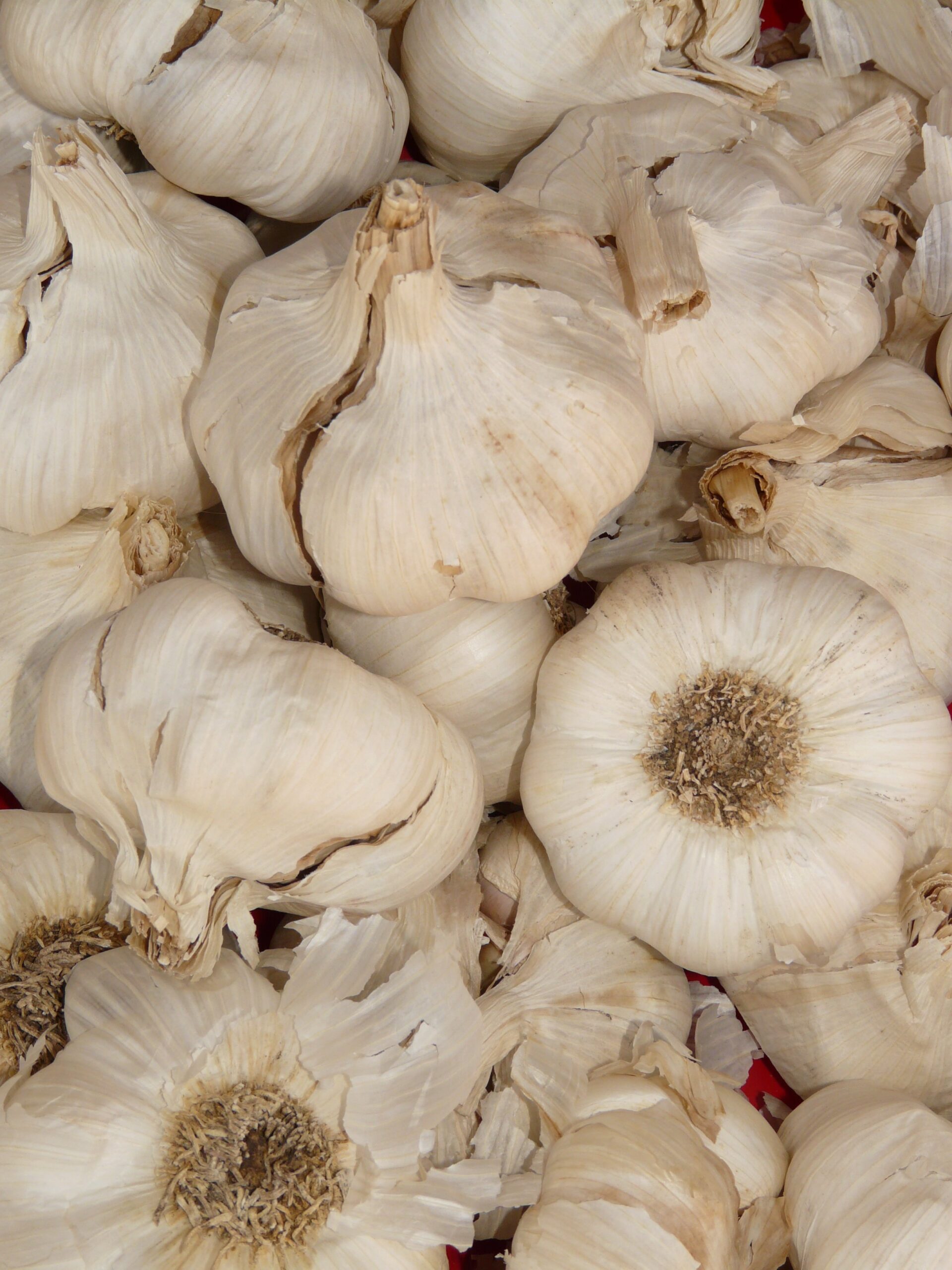
Do not deliberately feed your dog garlic or use it as a homemade flea treatment. Raw garlic, cooked garlic, and dried or powdered forms can damage red blood cells. After a suspected ingestion, contact your veterinarian or an animal poison service with the product, amount, timing, and your dog’s weight. The Merck Veterinary Manual describes toxicity from garlic and related Allium plants, including delayed illness.
A small trace in a commercially formulated food is not the same exposure as a clove, supplement, or spoonful of garlic powder. This guide does not give a universal safe amount or suggest that every accidental crumb causes poisoning. It helps you get the right individual assessment without losing time to guesswork.
Cooking does not settle the safety question
Garlic belongs to the same plant group as onion, leek, and chive. Merck explains that both fresh and processed forms can be involved in poisoning. The relevant question is the actual exposure, not whether the food was baked, fried, or served cold.
| Possible source | Information to save | Do not assume |
|---|---|---|
| Whole cloves or chopped garlic | Estimated amount missing and when it was accessible. | A dog will reject it because of the smell. |
| Garlic powder or seasoning blend | Container, ingredient list, and approximate amount. | A small-looking volume equals a small fresh-food exposure. |
| Bread, sauce, stock, or leftovers | Recipe or packaging and the amount of the entire dish eaten. | Removing visible garlic pieces removes the risk. |
| A supplement or flea remedy | Product strength, other ingredients, and every recent dose. | A natural label establishes safety or effectiveness. |
| Commercial dog food | The exact brand, product, and label if you have concerns. | An ingredient name alone describes the dose. |
This is a call-preparation table, not a toxicity calculator. Avoid converting a general internet number into permission to observe at home, particularly when the amount or concentration is uncertain.
What to do after your dog eats garlic
The ASPCA recommends removing access, gathering evidence, and contacting a professional promptly after suspected poisoning, even when an animal initially appears normal.
- Prevent another serving. Put the food and packaging out of reach without confronting a dog guarding it.
- Gather the basics. Note your dog’s weight, what was eaten, approximately how much, when it happened, and whether there were earlier exposures.
- Call for an assessment. Contact your veterinarian, an emergency clinic, or ASPCA Animal Poison Control at 888-426-4435 in the United States. A consultation fee may apply.
- Follow the specific instructions. Keep the product available to describe and bring it with you if the clinic requests it.
Do not induce vomiting or give salt, oil, milk, or another home remedy. The ASPCA warns that attempting to cause vomiting without veterinary direction can create additional harm. Whether decontamination is appropriate depends on the dog, substance, timing, and clinical condition.
Why a normal-looking dog still needs advice
Garlic-associated red-cell injury may not be obvious immediately. Merck describes signs developing days after ingestion, including weakness, pale or yellowish tissues, and collapse. Early stomach upset is not the only thing to watch for.
Do not wait for the complete list of possible signs. Difficulty breathing, marked weakness, or collapse warrants emergency care. During a call, describe what you actually see rather than trying to decide at home whether the dog has anemia.
A useful note is: “Garlic bread, approximately this much, last accessible at this time; dog weighs this much; no symptoms noticed yet.” An accurate uncertainty is better than a falsely precise dose estimate. A photo of the remaining food or recipe can help you explain the situation.
Garlic is not a sensible flea-control shortcut
Pet Poison Helpline advises against garlic as a flea remedy and notes that repeated exposure can matter. Use a veterinary-recommended prevention plan suited to your dog’s species, age, health, and household instead of adding a kitchen ingredient to meals.
The same source distinguishes tiny quantities used in some commercial products from significant or repeated ingestion. That distinction supports asking about an exact product; it does not support making your own garlic supplement or borrowing a dose from another dog.
Make the next meal easier to manage
Set aside any suitable plain dog snack before seasoning your meal. Keep scraps in a closed bin, place spice jars away from counter edges, and tell other household members that garlic bread is not the dog’s portion.
For an optional plain-food extra, compare our guides to cucumber and prepared apple. Neither is an antidote after exposure. Food-free play is also available in the activity finder.
Common questions
Is garlic powder safer than fresh garlic?
No. Processed forms still require attention, and their concentration differs. Save the label and obtain an assessment instead of comparing spoonfuls by appearance.
Should I watch and wait after a small bite?
Get advice based on the actual food and amount. A professional may recommend observation in some situations, but a guessed safe threshold should not make that decision for you.
Can I remove the garlic from leftovers and feed the rest?
Choose a different plain food. Mixed dishes can contain dispersed seasoning and other unsuitable ingredients that are not removed by picking out visible pieces.
Sources and editorial notes
Merck, ASPCA, and Pet Poison Helpline support the toxicity and response guidance. The information table and kitchen arrangements are organizational examples, not an assessment of an individual exposure. See our editorial standards.