Care & health guides · Shedding
You cannot stop a healthy dog’s normal hair cycle, but you can manage loose hair with suitable brushing, a practical cleanup routine, and coat care that does not irritate the skin. New bald patches, sore skin, or a marked unexplained change need a veterinary check rather than a stronger de-shedding tool.
The goal is a comfortable dog and a manageable home—not a promise of zero hair. A short-coated dog can leave plenty of visible hair, while hair caught in a longer coat can create tangles even when the sofa looks relatively clean.
Learn your dog’s ordinary pattern
The AKC explains that coat type, daylight, temperature, and the indoor environment influence shedding. Some dogs have obvious seasonal changes; others lose hair more evenly through the year. Compare your dog with their usual pattern, not with a different breed or a social-media before-and-after clip.
A simple note can record when the increase began, whether the coat still covers the skin normally, and whether itching or another health change appeared. Do not count every hair or turn a normal grooming session into repeated pulling to see how much comes out.
Build a routine around three jobs
| Job | A practical arrangement | Avoid |
|---|---|---|
| Remove already loose hair | Use a coat-appropriate tool for a short comfortable session. | Increasing pressure until no more hair appears. |
| Keep the resting area clean | Use washable bedding or a suitable removable cover. | Loose damaged fabric that the dog chews or swallows. |
| Notice skin changes | Look gently during ordinary grooming and record anything new. | Treating every patch or sore as ordinary shedding. |
The table is our household organization, not a mandatory brushing frequency. Put the supplies near the place where comfortable grooming already works, and choose a moment when you can pay attention to the dog.
Use the right tool without chasing a bigger pile
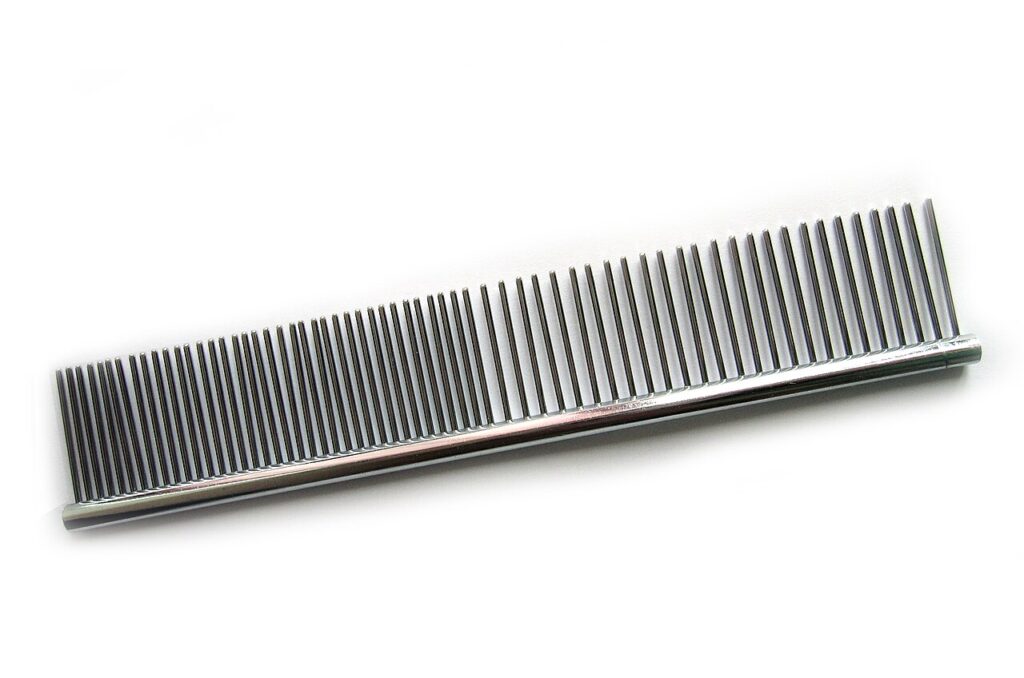
AAHA recommends regular brushing suited to the coat and cautions against unnecessary bathing that dries or irritates skin. Ask a veterinarian or qualified groomer to demonstrate the brush, depth, and pressure on your individual dog. A tool marketed for heavy shedding is not automatically appropriate for every coat.
Work gently and stop if the dog pulls away, the skin reddens, or the tool catches. A large pile of removed hair is not a quality measure. Persistent tangles or firm mats need a separate plan; do not use scissors close to hidden skin or keep dragging a blade through resistance.
Our routine coat-care guide helps organize maintenance, and the handling guide explains how to build cooperation rather than hold a worried dog more tightly.
Make cleanup easier without making the dog part of the appliance
Choose a few manageable cleaning tasks: remove hair from the resting area, wash covers according to their instructions, and vacuum the floor when the dog has comfortable space elsewhere. Keep lint tools, cords, and cleaning products out of reach.
This is a housekeeping suggestion, not a recommendation to vacuum the dog. Noise-sensitive dogs may need a separate arrangement while appliances run. Do not turn a cleanup task into forced exposure to a frightening sound.
Check washable covers for damage before putting them back. A tidy-looking area should still allow the dog to rest comfortably and leave freely. The weekly planner can hold one short reminder, such as checking the bedding after a brush session; it is not a requirement to add a grooming task every day.
When loose hair is not just a cleanup problem
The AKC distinguishes normal shedding from alopecia—thinning hair or bald areas. Allergies, parasites, infections, hormonal problems, and other conditions can affect the coat. Appearance alone does not identify which explanation applies.
Arrange a veterinary check for new bald spots, irritated or crusted skin, repeated scratching, or a sudden persistent change. Mention altered appetite, thirst, energy, or medications too. See our skin-and-coat concern guide for an observation format.
Do not add oils, supplements, or repeated shampoos to conceal the change before asking for advice. A complete feeding history and list of recent products help the veterinary team more than several unrecorded experiments.
Common questions
Will shaving stop shedding?
It changes the hair you see, not the underlying hair cycle. Whether clipping is appropriate depends on the coat, skin, and practical need. Ask a qualified professional rather than shaving as a universal solution.
How often should I brush?
Use the coat’s needs and the dog’s comfort to set the routine. Seasonal changes may call for adjustments, but a fixed number from another dog’s plan is not automatically right.
Does a low-shedding coat need less care?
Not necessarily. Loose hair can remain trapped in the coat and contribute to tangling. Plan maintenance around the actual coat rather than the amount left on furniture.
Sources and editorial notes
The linked sources explain the hair-cycle and health distinctions. The cleanup plan is a practical household example, not a product test or a promise to eliminate shedding. See our editorial standards.