Care & health guides · Comfortable handling
The safest home-grooming plan is not the strongest hold. Use a stable, nonslip place, introduce handling gradually, and stop when the dog becomes uncomfortable or cannot be managed safely. Painful mats, significant fear, or a bite risk call for veterinary or appropriately qualified grooming support rather than improvised restraint.
This guide concerns routine brushing and preparation for care. It is not an emergency-restraint protocol. A professional may need to use specific handling or prescribed medication for necessary treatment; ask them to demonstrate an appropriate plan instead of copying a restraint from a video.
Prepare the space before bringing the dog
Dogs Trust recommends introducing handling gently in a quiet, comfortable setting. The dog should be relaxed and able to cooperate. A slippery floor, loud dryer, or unstable table makes the task harder before the brush even touches the coat.
Our practical setup is a floor-level nonslip mat when that works for the task and dog, good light, tools within the adult’s reach, and no other pets or children crowding the area. Keep exits secure without cornering the dog. Never leave a dog unattended on a raised surface or attached to grooming equipment.
Teach handling in small pieces
- Begin with presence. Let the dog investigate the area and the inactive tool without starting a full groom.
- Try a brief comfortable touch. Choose an area the dog already accepts and pair it with something appropriate they enjoy.
- Pause and observe. Does the dog remain comfortable and choose to stay? Moving away is a reason to make the next attempt easier.
- Add one small change. A brush touching the coat and a short stroke are separate steps when the tool is unfamiliar.
- End before a struggle. Several comfortable moments are a useful result; completing every body area is not required in one session.
Dogs Trust advises stopping when tension, avoidance, or other discomfort appears, and seeking veterinary advice for established fear or aggression. Do not make a treat into a distraction that allows you to continue a painful task unnoticed.
Decide what belongs at home
| Situation | Reasonable next step | Not the solution |
|---|---|---|
| Dog accepts a few gentle brush strokes | Keep the session short and repeat later. | Suddenly turning it into a full haircut. |
| Dog withdraws a paw or turns away | Pause and review comfort and difficulty. | Holding tighter until movement stops. |
| A brush catches in a firm mat | Stop pulling and arrange suitable help. | Cutting close to hidden skin with scissors. |
| Skin is sore, bleeding, or weeping | Contact the veterinarian. | A cosmetic groom over the damaged area. |
| Growling, snapping, or panic appears | End safely and obtain an individual plan. | Punishment or an improvised muzzle to finish the job. |
The table organizes decisions rather than prescribing a restraint. A task being overdue does not make an unsafe home attempt necessary.
Match the tool to the coat
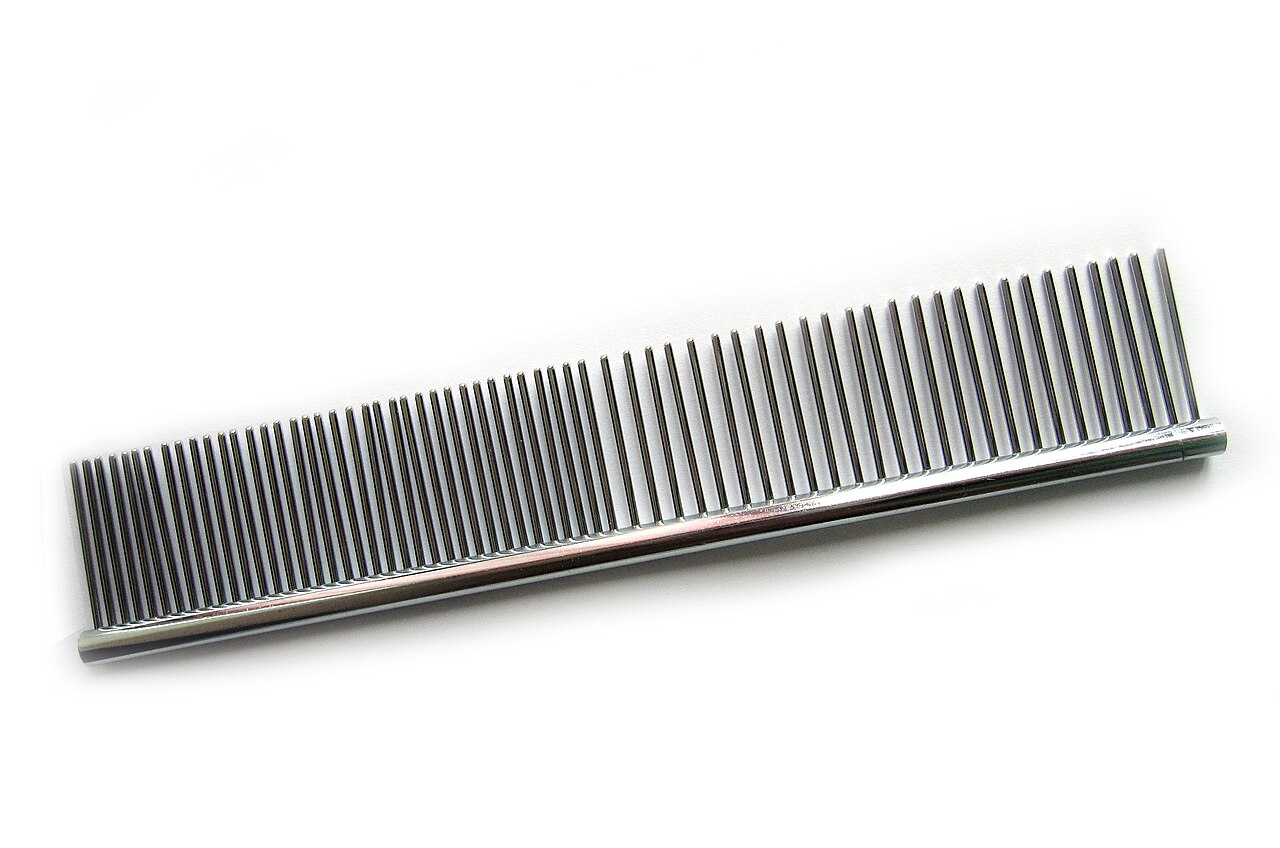
PDSA notes that different coat types need different brushes and combs. Ask a reputable groomer or veterinarian to show the appropriate tool and pressure on your dog. Buying a tool labeled professional does not supply the technique.
VCA warns against using scissors to remove mats and recommends professional care for severe tangling or skin irritation. Skin can be drawn into a mat and difficult to see. Do not keep pulling at it to expose a cutting line.
Prepare for a professional appointment
Tell the clinic or groomer what tasks are difficult, any history of snapping or biting, known painful areas, and which approaches have been comfortable. Ask how the session will be adapted, when they will stop, and whether medical assessment is needed first.
Do not give human sedatives, leftover medicine, or a calming supplement combination to make grooming possible. Any medication plan belongs with the veterinarian and the exact dog. Our fear guide explains why forced exposure is not a shortcut to comfort.
Common questions
Should someone hold my dog while I brush?
A calm helper may support an already comfortable setup, but a second person should not turn the session into a wrestling match. Get a demonstration of safe handling when support is necessary.
Can I tie the dog so they cannot move?
Do not improvise a tether or neck restraint to overcome resistance. It can introduce choking, entanglement, fall, and panic risks. Choose a safer setting or professional help.
How do I make progress between appointments?
Practice a small comfortable handling step away from the urgent task. Record what worked in the weekly planner, and follow the individualized instructions your professional provides.
Sources and editorial notes
The linked welfare and veterinary guidance supports gradual handling and the limits of home grooming. The setup and decision table are practical examples, not a restraint protocol or claim of hands-on testing. See our editorial standards.